
jueves, 21 de febrero de 2013
John Wayne, The man.
El hombre por excelencia como prototipo macarrónico y de machista empedernido fue encarnado en la meca del cine y parece que en la vida personal debido a las numerosas bodas que tuvo fue este señor llamado Marion Morrison.
 Marion Mitchell Morrison (born Marion Robert Morrison; May 26, 1907 – June 11, 1979), better known by his stage name John Wayne, was an American film actor, director and producer. An Academy Award-winner, Wayne was among the top box office draws for three decades,and was named the all-time top money-making star.An enduring American icon, he epitomized rugged masculinity and is famous for his demeanor, including his distinctive calm voice, walk, and height.
Wayne was born in Winterset, Iowa but his family relocated to the greater Los Angeles area when he was four years old. He found work at local film studios when he lost his football scholarship to USC as a result of a bodysurfing accident. Initially working for the Fox Film Corporation, he mostly appeared in small bit parts. His first leading role came in the widescreen epic The Big Trail (1930), which led to leading roles in numerous films throughout the 1930s, many of them in the western genre. His career rose to further heights in 1939, with John Ford's Stagecoach making him an instant superstar. Wayne would go on to star in 142 pictures, primarily typecast in Western films.
Among his best known later films are The Quiet Man (1952), which follows him as an Irish-American boxer and his love affair with a fiery spinster played by Maureen O'Hara; The Searchers (1956), in which he plays a Civil War veteran who seeks out his abducted niece; Rio Bravo (1959), playing a Sheriff with Dean Martin; True Grit (1969), playing a humorous U.S. Marshal who sets out to avenge a man's death in the role that won Wayne an Academy Award; and The Shootist (1976), his final screen performance in which he plays an aging gunslinger battling cancer.
Wayne moved to Orange County, California in the 1960s, and was a prominent Republican in Hollywood, supporting anti-communist positions. He died of stomach cancer in 1979. In June 1999, the American Film Institute named Wayne 13th among the Greatest Male Screen Legends of All Time.
Contents
1 Early life
2 Film career
2.1 Early career and breakthrough
2.2 Commercial success
2.3 Later career
3 Personal life
3.1 Politics
3.2 Death
4 Legacy
4.1 Awards, celebrations, and landmarks
4.2 Cultural image as an American icon
5 Missed roles
6 Awards and nominations
6.1 Academy Award
6.2 Best Actor
6.3 Producer
6.4 Golden Globe
7 Filmography
8 See also
9 References
10 Further reading
11 External links
Early life
Wayne was born Marion Robert Morrison at 216 South Second Street in Winterset, Iowa.[7] His middle name was soon changed from Robert to Mitchell when his parents decided to name their next son Robert.
The house in Winterset, Iowa in which Wayne was born in 1907
Wayne's father, Clyde Leonard Morrison (1884–1937), was the son of American Civil War veteran Marion Mitchell Morrison (1845–1915). Wayne's mother, the former Mary "Molly" Alberta Brown (1885–1970), was from Lancaster County, Nebraska. Wayne's ancestry included Scots-Irish, Irish, and English. He was brought up as a Presbyterian.
Wayne's family moved to Palmdale, California, and then in 1911 to Glendale, California, where his father worked as a pharmacist. A local fireman at the station on his route to school in Glendale started calling him "Little Duke" because he never went anywhere without his huge Airedale Terrier, Duke. He preferred "Duke" to "Marion", and the name stuck for the rest of his life.
As a teen, Wayne worked in an ice cream shop for a man who shod horses for Hollywood studios. He was also active as a member of the Order of DeMolay, a youth organization associated with the Freemasons. He attended Wilson Middle School in Glendale. He played football for the 1924 champion Glendale High School team.
Wayne applied to the U.S. Naval Academy, but was not accepted. He instead attended the University of Southern California (USC), majoring in pre-law. He was a member of the Trojan Knights and Sigma Chi fraternities. Wayne also played on the USC football team under coach Howard Jones. An injury curtailed his athletic career; Wayne later noted he was too terrified of Jones's reaction to reveal the actual cause of his injury, a bodysurfing accident. He lost his athletic scholarship and, without funds, had to leave the university.
Wayne began working at the local film studios. Prolific silent western film star Tom Mix had found him a summer job in the prop department in exchange for football tickets. Wayne soon moved on to bit parts, establishing a longtime friendship with the director who provided most of those roles, John Ford. Early in this period, Wayne appeared with his USC teammates playing football in Brown of Harvard (1926), The Dropkick (1927), and Salute (1929) and Columbia's Maker of Men (filmed in 1930, released in 1931).
Film career
Early career and breakthrough
Born to the West (1937)
While working for Fox Film Corporation in bit roles, he was given on-screen credit as "Duke Morrison" only once, in Words and Music (1929). In 1930, director Raoul Walsh saw him moving studio furniture while working as a prop boy and cast him in his first starring role in The Big Trail (1930). For his screen name, Walsh suggested "Anthony Wayne", after Revolutionary War general "Mad Anthony" Wayne. Fox Studios chief Winfield Sheehan rejected it as sounding "too Italian". Walsh then suggested "John Wayne". Sheehan agreed, and the name was set. Wayne himself was not even present for the discussion.[23] His pay was raised to $105 a week.
(video) The manner and voice of John Wayne (right) showcased in a short clip from the film Angel and the Badman, 1947.
The Big Trail was to be the first big-budget outdoor spectacle of the sound era, made at a staggering cost of over $2 million, using hundreds of extras and wide vistas of the American southwest, still largely unpopulated at the time. To take advantage of the breathtaking scenery, it was filmed in two versions, a standard 35mm version and another in the new 70 mm Grandeur film process using innovative camera and lenses. Many in the audience who saw it in Grandeur stood and cheered. Unfortunately, only a handful of theaters were equipped to show the film in its widescreen process, and the effort was largely wasted. Despite being highly regarded by modern critics, the film was considered a huge box office flop at the time.
After the commercial failure of The Big Trail, Wayne was relegated to small roles in A-pictures, including Columbia's The Deceiver (1931), in which he played a corpse. He appeared in the serial The Three Musketeers (1933), an updated version of the Alexandre Dumas novel in which the protagonists were soldiers in the French Foreign Legion in then-contemporary North Africa. He played the lead, with his name over the title, in many low-budget "Poverty Row" westerns, mostly at Monogram Pictures and serials for Mascot Pictures Corporation. By Wayne's own estimation, he appeared in about eighty of these horse operas from 1930 to 1939. In Riders of Destiny (1933) he became one of the first singing cowboys of film, albeit via dubbing. Wayne also appeared in some of the Three Mesquiteers westerns, whose title was a play on the Dumas classic. He was mentored by stuntmen in riding and other western skills. He and famed stuntman Yakima Canutt developed and perfected stunts and onscreen fisticuffs techniques still used today.
Wayne's breakthrough role came with director John Ford's classic Stagecoach (1939). Because of Wayne's B-movie status and track record in low-budget westerns throughout the 1930s, Ford had difficulty getting financing for what was to be an A-budget film. After rejection by all the top studios, Ford struck a deal with independent producer Walter Wanger in which Claire Trevor — a much bigger star at the time — received top billing. Stagecoach was a huge critical and financial success, and Wayne became a mainstream star.
America's entry into World War II resulted in a deluge of support for the war effort from all sectors of society, and Hollywood was no exception. Wayne was exempted from service due to his age (34 at the time of Pearl Harbor) and family status, classified as 3-A (family deferment). He repeatedly wrote to John Ford, asking to be placed in Ford's military unit, but consistently postponed it until "after he finished one more film", Wayne did not attempt to prevent his reclassification as 1-A (draft eligible), but Republic Studios was emphatically resistant to losing him; Herbert J. Yates, President of Republic, threatened Wayne with a lawsuit if he walked away from his contract and Republic Pictures intervened in the Selective Service process, requesting Wayne's further deferment.
Wayne toured U.S. bases and hospitals in the South Pacific for three months in 1943 and 1944. By many accounts, Wayne's failure to serve in the military was the most painful experience of his life. His widow later suggested that his patriotism in later decades sprang from guilt, writing: "He would become a 'superpatriot' for the rest of his life trying to atone for staying home."
Commercial success
Wake of the Red Witch (1948)
Wayne's first color film was Shepherd of the Hills (1941), in which he co-starred with his longtime friend Harry Carey. The following year, he appeared in his only film directed by Cecil B. DeMille, the Technicolor epic Reap the Wild Wind (1942), in which he co-starred with Ray Milland and Paulette Goddard; it was one of the rare times he played a character with questionable values. He would appear in more than twenty of John Ford's films throughout the next two decades, including She Wore a Yellow Ribbon (1949), The Quiet Man (1952), The Searchers (1956), The Wings of Eagles (1957), and The Man Who Shot Liberty Valance (1962).
In 1949, director Robert Rossen offered the starring role of All the King's Men to Wayne. Wayne refused, believing the script to be un-American in many ways. Broderick Crawford, who eventually got the role, won the 1949 Oscar for best male actor, ironically beating out Wayne, who had been nominated for Sands of Iwo Jima.
He lost the leading role in The Gunfighter (1950) to Gregory Peck due to his refusal to work for Columbia Pictures because its chief, Harry Cohn, had mistreated him years before when he was a young contract player. Cohn had bought the project for Wayne, but Wayne's grudge was too deep, and Cohn sold the script to Twentieth Century Fox, which cast Peck in the role Wayne badly wanted but for which he refused to bend.
One of Wayne's most popular roles was in The High and the Mighty (1954), directed by William Wellman, and based on a novel by Ernest K. Gann. His portrayal of a heroic copilot won widespread acclaim. Wayne also portrayed aviators in Flying Tigers (1942), Flying Leathernecks (1951), Island in the Sky (1953), The Wings of Eagles (1957), and Jet Pilot (1957).
The Searchers (1956) continues to be widely regarded as perhaps Wayne's finest and most complex performance. In 2006, Premiere Magazine ran an industry poll in which Wayne's portrayal of Ethan Edwards was rated the 87th greatest performance in film history. He named his youngest son Ethan after the character.
Later career
John Wayne won a Best Actor Oscar for True Grit (1969). Wayne was also nominated as the producer of Best Picture for The Alamo (1960), one of two films he directed. The other was The Green Berets (1968), the only major film made during the Vietnam War to support the war. During the filming of Green Berets, the Degar or Montagnard people of Vietnam's Central Highlands, fierce fighters against communism, bestowed on Wayne a brass bracelet that he wore in the film and all subsequent films.
In McQ, with co-star Diana Muldaur (1974)
An interview Wayne gave to Playboy magazine and published in its May 1971 issue, turned into a firestorm of controversy. Wayne made headlines for his resolute opinions about social issues and race relations in the United States. In the same interview he expressed his support for the Vietnam War.
“I believe in white supremacy, until blacks are educated to the point of responsibility. I don't feel we did wrong in taking this great country away from them, [the Indians] if that's what you're asking. Our so-called stealing of this country from them was just a matter of survival. There were great numbers of people who needed new land, and the Indians were selfishly trying to keep it for themselves.
In an attempt to capitalize on the popularity of Dirty Harry,[citation needed] Wayne took on the role of gritty detective McQ in the 1974 crime drama. His last film was The Shootist (1976), whose main character, J. B. Books, was dying of cancer — the illness to which Wayne himself succumbed three years later. According to the Internet Movie Database, Wayne played the lead in 142 of his film appearances.
Batjac, the production company co-founded by Wayne, was named after the fictional shipping company Batjak in Wake of the Red Witch (1948), a film based on the novel by Garland Roark. (A spelling error by Wayne's secretary was allowed to stand, accounting for the variation.) Batjac (and its predecessor, Wayne-Fellows Productions) was the arm through which Wayne produced many films for himself and other stars. Its best-known non-Wayne production was the highly acclaimed Seven Men From Now (1956), which started the classic collaboration between director Budd Boetticher and star Randolph Scott.
In the Motion Picture Herald Top Ten Money-Making Western Stars poll, Wayne was listed in 1936 and 1939.[38] He appeared in the similar Box Office poll in 1939 and 1940. While these two polls are really an indication only of the popularity of series stars, Wayne also appeared in the Top Ten Money Makers Poll of all films from 1949 to 1957 and 1958 to 1974, taking first place in 1950, 1951, 1954 and 1971. With a total of 25 years on the list, Wayne has more appearances than any other star, beating Clint Eastwood (21) into second place.
Wayne in The Challenge of Ideas (1961)
In later years, Wayne was recognized as a sort of American natural resource, and his various critics, of his performances and his politics, viewed him with more respect. Abbie Hoffman, the radical of the 1960s, paid tribute to Wayne's singularity, saying, "I like Wayne's wholeness, his style. As for his politics, well — I suppose even cavemen felt a little admiration for the dinosaurs that were trying to gobble them up."Reviewing The Cowboys (1972), Vincent Canby of the New York Times, who did not particularly care for the film, wrote: "Wayne is, of course, marvelously indestructible, and he has become an almost perfect father figure."
Personal life
Wayne was married three times and divorced twice. His wives, each of Hispanic descent, were Josephine Alicia Saenz, Esperanza Baur, and Pilar Pallete. He had four children with Josephine: Michael Wayne (November 23, 1934 – April 2, 2003), Mary Antonia "Toni" Wayne LaCava (February 25, 1936 — December 6, 2000), Patrick Wayne (born July 15, 1939), and Melinda Wayne Munoz (born December 3, 1940). He had three more children with Pilar: Aissa Wayne (born March 31, 1956), John Ethan Wayne (born February 22, 1962), and Marisa Wayne (born February 22, 1966).
Wayne with third wife Pilar Pallete at Knott's Berry Farm in 1971
Several of Wayne's children entered the film and television industry; Wayne's son Ethan was billed as John Ethan Wayne in a few films, and played one of the leads in the 1990s update of the Adam-12 television series.
His stormiest divorce was from Esperanza Baur, a former Mexican actress. She convinced herself that Wayne and co-star Gail Russell were having an affair. The night the film Angel and the Badman (1947) wrapped, there was the usual party for cast and crew, and Wayne came home very late. Esperanza was in a drunken rage by the time he arrived, and she attempted to shoot him as he walked through the front door.
Wayne had several high-profile affairs, including one with Marlene Dietrich that lasted for three years. After his separation from his wife, Pilar, in 1973, Wayne became romantically involved and lived with his former secretary Pat Stacy (1941–1995) until his death in 1979. She published a biography of her life with him entitled Duke: A Love Story in 1983.
Wayne's hair began thinning in the 1940s, and he started wearing a hairpiece by the end of that decade. He was occasionally seen in public without the hairpiece (notably, according to Life magazine, at Gary Cooper's funeral). During a widely noted appearance at Harvard University, Wayne was asked by a student, "Where did you get that phony hair?" He responded, "It's not phony. It's real hair. Of course, it's not mine, but it's real."
A close friend of Wayne's, California Congressman Alphonzo Bell, wrote of him, "Duke's personality and sense of humor were very close to what the general public saw on the big screen. It is perhaps best shown in these words he had engraved on a plaque: 'Each of us is a mixture of some good and some not so good qualities. In considering one's fellow man it's important to remember the good things ... We should refrain from making judgments just because a fella happens to be a dirty, rotten SOB.'"
Wayne biographer Michael Munn chronicled Wayne's drinking habits. According to Sam O'Steen's memoir, Cut to the Chase, studio directors knew to shoot Wayne's scenes before noon, because by afternoon he "was a mean drunk". He had been a chain-smoker of cigarettes since young adulthood and was diagnosed with lung cancer in 1964. He underwent successful surgery to remove his entire left lung[48] and four ribs. Despite efforts by his business associates to prevent him from going public with his illness for fear that it would cost him work, Wayne announced he had cancer and called on the public to get preventive examinations. Five years later, Wayne was declared cancer-free.
Wayne's height has been perennially described as at least 6'4" (193 cm). He was a Freemason, a Master Mason in Marion McDaniel Lodge #56 F&AM, in Tucson, Arizona. He became a 32nd Degree Scottish Rite Mason and later joined the Al Malaikah Shrine Temple in Los Angeles. He became a member of the York Rite. During the early 1960s, John Wayne traveled extensively to Panama, during which he purchased the island of Taborcillo off the main coast. It was sold by his estate at his death and changed hands many times before being opened as a tourist attraction.[citation needed]
Wayne's yacht, the Wild Goose, was one of his favorite possessions. He kept it docked in Newport Harbor and it was listed on the U.S. National Register of Historic Places in 2011.
Politics
Throughout most of his life, Wayne was a vocally prominent conservative Republican. Initially a self-described socialist during his college years, he voted for Democratic President Franklin D. Roosevelt in the 1936 presidential election and expressed admiration for Roosevelt's successor, fellow Democratic President Harry S Truman. He took part in creating the Motion Picture Alliance for the Preservation of American Ideals in February 1944 and was elected president of that organization in 1947. An ardent anti-communist and vocal supporter of the House Un-American Activities Committee, in 1952 he made Big Jim McLain to show his support for the anti-communist cause. Recently declassified Soviet documents reveal that despite being a fan of Wayne's movies, Soviet dictator Joseph Stalin ordered Wayne's assassination as a result of his frequently-espoused anti-communist politics.[53][54]
Wayne meets with President Richard Nixon and Henry Kissinger in San Clemente, California, July 1972
Wayne supported Vice President Richard Nixon in the presidential election of 1960, but expressed his vision of patriotism when John F. Kennedy won the election: "I didn't vote for him but he's my president, and I hope he does a good job." He used his iconic star power to support conservative causes, including rallying support for the Vietnam War by producing, co-directing, and starring in the critically panned The Green Berets in 1968. In a 1971 interview with Playboy magazine Wayne responded to questions about whether entitlement programs including Medicare and Social Security were good for the country:
I know all about that. In the late Twenties, when I was a sophomore at USC, I was a socialist myself — but not when I left. The average college kid idealistically wishes everybody could have ice cream and cake for every meal. But as he gets older and gives more thought to his and his fellow man's responsibilities, he finds that it can't work out that way — that some people just won't carry their load ... I believe in welfare — a welfare work program. I don't think a fella should be able to sit on his backside and receive welfare. I'd like to know why well-educated idiots keep apologizing for lazy and complaining people who think the world owes them a living. I'd like to know why they make excuses for cowards who spit in the faces of the police and then run behind the judicial sob sisters. I can't understand these people who carry placards to save the life of some criminal, yet have no thought for the innocent victim.
Due to his enormous popularity and his status as the most famous Republican star in Hollywood, wealthy Texas Republican Party backers asked Wayne to run for national office in 1968, as had his friend and fellow actor Senator George Murphy. He declined, joking that he did not believe the public would seriously consider an actor in the White House. Instead he supported his friend Ronald Reagan's runs for Governor of California in 1966 and 1970. He was asked to be the running mate for Democratic Alabama Governor George Wallace in 1968, rejecting the offer and actively campaigned for Richard Nixon; Wayne addressed the Republican National Convention on its opening day in August 1968. For awhile, he was also a member of the conservative, anti-communism group the John Birch Society.
Wayne openly differed with the Republican Party over the issue of the Panama Canal, as he supported the Panama Canal Treaty in the mid-1970s; conservatives had wanted the U.S. to retain full control of the canal, but Wayne believed that the Panamanians had the right to the canal and sided with President Jimmy Carter and the Democrats. Mr. Wayne was a close friend of the late Panamanian leader Omar Torrijos Herrera and Wayne's first wife, Josephine, was a native of Panama.
Death
Although he enrolled in a cancer vaccine study in an attempt to ward off the disease, John Wayne died of stomach cancer on June 11, 1979, at the UCLA Medical Center, and was interred in the Pacific View Memorial Park cemetery in Corona del Mar. According to his son Patrick and his grandson Matthew Muñoz, a priest in the California Diocese of Orange, he converted to Roman Catholicism shortly before his death.He requested that his tombstone read "Feo, Fuerte y Formal", a Spanish epitaph Wayne described as meaning "ugly, strong, and dignified".However, the grave, unmarked for twenty years, is now marked with a quotation from his controversial 1971 Playboy interview: "Tomorrow is the most important thing in life. Comes into us at midnight very clean. It's perfect when it arrives and it puts itself in our hands. It hopes we've learned something from yesterday."
Among the 220 or so cast and crew who filmed the 1956 film The Conqueror on location near St. George, Utah, 91 at various times developed some form of cancer (41%), including stars Wayne, Susan Hayward, and Agnes Moorehead, and director Dick Powell. The film was shot in southwestern Utah, east of and generally downwind from the site of recent U.S. Government nuclear weapons tests in southeastern Nevada. The 41% incidence of cancer in the cast and crew is very close to that of the general population, but many contend that radioactive fallout from these tests contaminated the film location and poisoned the film crew working there. Despite the suggestion that Wayne's 1964 lung cancer and his 1979 stomach cancer resulted from nuclear contamination, he himself believed his lung cancer to have been a result of his six-pack-a-day cigarette habit.
Legacy
Awards, celebrations, and landmarks
John Wayne's enduring status as an iconic American was formally recognized by the U.S. government by awarding him the two highest civilian decorations. He was recognized by the United States Congress on May 26, 1979, when he was awarded the Congressional Gold Medal. Hollywood figures and American leaders from across the political spectrum, including Maureen O'Hara, Elizabeth Taylor, Frank Sinatra, Mike Frankovich, Katharine Hepburn, General and Mrs. Omar Bradley, Gregory Peck, Robert Stack, James Arness, and Kirk Douglas, testified to Congress of the merit and deservedness of this award. Most notable was the testimony of Robert Aldrich, then president of the Directors Guild of America, who said:
"It is important for you to know that I am a registered Democrat and, to my knowledge, share none of the political views espoused by Duke. However, whether he is ill disposed or healthy, John Wayne is far beyond the normal political sharp shooting in this community. Because of his courage, his dignity, his integrity, and because of his talents as an actor, his strength as a leader, his warmth as a human being throughout his illustrious career, he is entitled to a unique spot in our hearts and minds. In this industry, we often judge people, sometimes unfairly, by asking whether they have paid their dues. John Wayne has paid his dues over and over, and I'm proud to consider him a friend and am very much in favor of my Government recognizing in some important fashion the contribution that Mr. Wayne has made."[citation needed]
On June 9, 1980, Wayne was posthumously awarded the Presidential Medal of Freedom by President Jimmy Carter, at whose inaugural ball Wayne had appeared "as a member of the loyal opposition," as Wayne described it in his speech to the gathering.
In 1998, Wayne was posthumously awarded the Naval Heritage Award by the U S Navy Memorial Foundation for his support of the U S Navy and military during his film career.
Various public locations are named in honor of Wayne, including the John Wayne Airport in Orange County, California, where a nine-foot bronze statue of him stands at the entrance; the John Wayne Marina that Wayne bequeathed the land for, near Sequim, Washington; John Wayne Elementary School (P.S. 380) in Brooklyn, New York, which boasts a 38-foot mosaic mural commission by New York artist Knox Martin entitled "John Wayne and the American Frontier". and a 100-plus-mile trail named the "John Wayne Pioneer Trail" in Washington state's Iron Horse State Park. A larger than life-size bronze statue of Wayne atop a horse was erected at the corner of La Cienega Boulevard and Wilshire Boulevard in Beverly Hills, California at the former offices of the Great Western Savings & Loan Corporation, for whom Wayne had made a number of commercials. In the city of Maricopa, Arizona, part of Arizona State Route 347 is named John Wayne Parkway, which runs through the center of town.
In 2006, friends of Wayne's and his former Arizona business partner, Louis Johnson, inaugurated the "Louie and the Duke Classics" events benefiting the John Wayne Cancer Foundation and the American Cancer Society.The weekend long event each fall in Casa Grande, Arizona includes a golf tournament, an auction of John Wayne memorabilia and a team roping competition.
Several celebrations took place on May 26, 2007, the centennial of Wayne's birth. A celebration at the John Wayne birthplace in Winterset, Iowa, included chuck-wagon suppers, concerts by Michael Martin Murphey and Riders in the Sky, a Wild West Revue in the style of Buffalo Bill's Wild West show, and a Cowboy Symposium with Wayne's co-stars, producers, and costumer. Wayne's films ran repetitiously at the local theater. Ground was broken for the New John Wayne Birthplace Museum and Learning Center at a ceremony consisting of over 30 of Wayne's family members, including Melinda Wayne Munoz, Aissa, Ethan and Marisa Wayne. Later that year California Governor Arnold Schwarzenegger and First Lady Maria Shriver inducted Wayne into the California Hall of Fame, located at The California Museum for History, Women and the Arts.Cultural image as an American icon
As a special guest star, with Lucille Ball (left) in I Love Lucy, 1955
Wayne rose beyond the typical recognition for a famous actor to that of an enduring icon who symbolized and communicated American values and ideals. By the middle of his career, Wayne had developed a larger-than-life image, and as his career progressed, he selected roles that would not compromise his off-screen image. By the time of his last film The Shootist (1976), Wayne refused to allow his character to shoot a man in the back as was originally scripted, saying "I've made over 250 pictures and have never shot a guy in the back. Change it."
Wayne's rise to being the quintessential movie war hero began to take shape four years after World War II, when Sands of Iwo Jima (1949) was released. His footprints at Grauman's Chinese theater in Hollywood were laid in concrete that contained sand from Iwo Jima. His status grew so large and legendary that when Japanese Emperor Hirohito visited the United States in 1975, he asked to meet John Wayne, the symbolic representation of his country's former enemy.
Wayne was a popular visitor to the war zones in World War II, Korea, and Vietnam. By the 1950s, perhaps in large part due to the military aspect of films such as the Sands of Iwo Jima, Flying Tigers, They Were Expendable, and the Ford cavalry trilogy, Wayne had become an icon to all the branches of the United States Armed Forces, even in light of his actual lack of military service. Many veterans have said their reason for serving was in some part related to watching Wayne's movies. His name is attached to various pieces of gear, such as the P-38 "John Wayne" can opener, so named because "it can do anything", paper towels known as "John Wayne toilet paper" because "it's rough and it's tough and don't take shit off no one," and C-ration crackers are called "John Wayne crackers" because presumably only someone as tough as Wayne could eat them. A rough and rocky mountain pass used by military tanks and jeeps at Fort Irwin in San Bernardino County, California, is aptly named "John Wayne Pass".Wayne is the only actor to appear in every edition of the annual Harris Poll of Most Popular Film Actors, and the only deceased actor to appear on the list after his death. Wayne has been in the top ten in this poll for 19 consecutive years, starting 15 years after his death in 1979.
Missed roles
John Wayne desperately wanted the role of "Jimmy Ringo" in the 1950 film The Gunfighter, directed by Henry King, but the role went to Gregory Peck instead. John Wayne's final film, The Shootist (1976), directed by Don Siegel was very similar to The Gunfighter.
An urban legend has it that John Wayne was offered the leading role of Matt Dillon in the longtime favorite television show Gunsmoke, but he turned it down, recommending instead James Arness for the role. The only part of this story that is true is that Wayne did indeed recommend Arness for the part. Wayne introduced Arness in a prologue to the first episode of Gunsmoke.Wayne was approached by Mel Brooks to play the part of the Waco Kid in the film Blazing Saddles. After reading the script he said, "I can't be in this picture, it's too dirty ... but I'll be the first in line to see it.He reportedly had initially strongly considered taking the role of Major Reisman in The Dirty Dozen, even asking MGM to make changes to the script to accommodate him. But ultimately, he turned it down to make The Green Berets. The role went to Lee Marvin.
Wayne had lobbied to play the lead in Dirty Harry, but Warner Bros. felt that at age 63, he was too old for the role. The role eventually went to Clint Eastwood.
Awards and nominations
Academy Award
Wayne was nominated for three Academy Awards. He was nominated twice for best actor and once for best picture since he was a producer. The Academy Awards are presented annually by the American Academy of Motion Picture Arts and Sciences (AMPAS) to recognize excellence in the film industry, winning one of them.
Best Actor
The winner for each year is highlighted in yellow.
- 1949 - - 1969 -
Actor Film Actor Film
Broderick Crawford All the King's Men Best Picture Richard Burton Anne of the Thousand Days
Kirk Douglas Champion Dustin Hoffman Midnight Cowboy Best Picture
Gregory Peck Twelve O'Clock High Peter O'Toole Goodbye Mr. Chips
Richard Todd The Hasty Heart Jon Voight Midnight Cowboy Best Picture
John Wayne Sands of Iwo Jima John Wayne True Grit
Producer
- 1960 -
Producer Film
Bernard Smith Elmer Gantry
Jerry Wald Sons and Lovers
John Wayne The Alamo
Billy Wilder The Apartment
Fred Zinnemann The Sundowners
Golden Globe
The Golden Globe Awards are presented annually by the Hollywood Foreign Press Association (HFPA) to recognize outstanding achievements in the entertainment industry, both domestic and foreign, and to focus wide public attention upon the best in motion pictures and television.
In 1953 he was awarded the Henrietta Award (a now retired award) for being World Film Favorite: Male. The Cecil B. DeMille Award for lifetime achievement in motion pictures is an annual award given by the Hollywood Foreign Press Association at the Golden Globe Award ceremonies in Hollywood, California. It was named in honor of Cecil B. DeMille (1881–1959), one of the industry's most successful filmmakers; John Wayne won the award in 1966.In 1970, Wayne won a Golden Globe Award for his performance in "True Grit".
Filmography
Main article: John Wayne filmography
Between 1926 and 1976, Wayne starred in over 170 motion pictures, and became one of America's biggest box office stars.
Marion Mitchell Morrison (born Marion Robert Morrison; May 26, 1907 – June 11, 1979), better known by his stage name John Wayne, was an American film actor, director and producer. An Academy Award-winner, Wayne was among the top box office draws for three decades,and was named the all-time top money-making star.An enduring American icon, he epitomized rugged masculinity and is famous for his demeanor, including his distinctive calm voice, walk, and height.
Wayne was born in Winterset, Iowa but his family relocated to the greater Los Angeles area when he was four years old. He found work at local film studios when he lost his football scholarship to USC as a result of a bodysurfing accident. Initially working for the Fox Film Corporation, he mostly appeared in small bit parts. His first leading role came in the widescreen epic The Big Trail (1930), which led to leading roles in numerous films throughout the 1930s, many of them in the western genre. His career rose to further heights in 1939, with John Ford's Stagecoach making him an instant superstar. Wayne would go on to star in 142 pictures, primarily typecast in Western films.
Among his best known later films are The Quiet Man (1952), which follows him as an Irish-American boxer and his love affair with a fiery spinster played by Maureen O'Hara; The Searchers (1956), in which he plays a Civil War veteran who seeks out his abducted niece; Rio Bravo (1959), playing a Sheriff with Dean Martin; True Grit (1969), playing a humorous U.S. Marshal who sets out to avenge a man's death in the role that won Wayne an Academy Award; and The Shootist (1976), his final screen performance in which he plays an aging gunslinger battling cancer.
Wayne moved to Orange County, California in the 1960s, and was a prominent Republican in Hollywood, supporting anti-communist positions. He died of stomach cancer in 1979. In June 1999, the American Film Institute named Wayne 13th among the Greatest Male Screen Legends of All Time.
Contents
1 Early life
2 Film career
2.1 Early career and breakthrough
2.2 Commercial success
2.3 Later career
3 Personal life
3.1 Politics
3.2 Death
4 Legacy
4.1 Awards, celebrations, and landmarks
4.2 Cultural image as an American icon
5 Missed roles
6 Awards and nominations
6.1 Academy Award
6.2 Best Actor
6.3 Producer
6.4 Golden Globe
7 Filmography
8 See also
9 References
10 Further reading
11 External links
Early life
Wayne was born Marion Robert Morrison at 216 South Second Street in Winterset, Iowa.[7] His middle name was soon changed from Robert to Mitchell when his parents decided to name their next son Robert.
The house in Winterset, Iowa in which Wayne was born in 1907
Wayne's father, Clyde Leonard Morrison (1884–1937), was the son of American Civil War veteran Marion Mitchell Morrison (1845–1915). Wayne's mother, the former Mary "Molly" Alberta Brown (1885–1970), was from Lancaster County, Nebraska. Wayne's ancestry included Scots-Irish, Irish, and English. He was brought up as a Presbyterian.
Wayne's family moved to Palmdale, California, and then in 1911 to Glendale, California, where his father worked as a pharmacist. A local fireman at the station on his route to school in Glendale started calling him "Little Duke" because he never went anywhere without his huge Airedale Terrier, Duke. He preferred "Duke" to "Marion", and the name stuck for the rest of his life.
As a teen, Wayne worked in an ice cream shop for a man who shod horses for Hollywood studios. He was also active as a member of the Order of DeMolay, a youth organization associated with the Freemasons. He attended Wilson Middle School in Glendale. He played football for the 1924 champion Glendale High School team.
Wayne applied to the U.S. Naval Academy, but was not accepted. He instead attended the University of Southern California (USC), majoring in pre-law. He was a member of the Trojan Knights and Sigma Chi fraternities. Wayne also played on the USC football team under coach Howard Jones. An injury curtailed his athletic career; Wayne later noted he was too terrified of Jones's reaction to reveal the actual cause of his injury, a bodysurfing accident. He lost his athletic scholarship and, without funds, had to leave the university.
Wayne began working at the local film studios. Prolific silent western film star Tom Mix had found him a summer job in the prop department in exchange for football tickets. Wayne soon moved on to bit parts, establishing a longtime friendship with the director who provided most of those roles, John Ford. Early in this period, Wayne appeared with his USC teammates playing football in Brown of Harvard (1926), The Dropkick (1927), and Salute (1929) and Columbia's Maker of Men (filmed in 1930, released in 1931).
Film career
Early career and breakthrough
Born to the West (1937)
While working for Fox Film Corporation in bit roles, he was given on-screen credit as "Duke Morrison" only once, in Words and Music (1929). In 1930, director Raoul Walsh saw him moving studio furniture while working as a prop boy and cast him in his first starring role in The Big Trail (1930). For his screen name, Walsh suggested "Anthony Wayne", after Revolutionary War general "Mad Anthony" Wayne. Fox Studios chief Winfield Sheehan rejected it as sounding "too Italian". Walsh then suggested "John Wayne". Sheehan agreed, and the name was set. Wayne himself was not even present for the discussion.[23] His pay was raised to $105 a week.
(video) The manner and voice of John Wayne (right) showcased in a short clip from the film Angel and the Badman, 1947.
The Big Trail was to be the first big-budget outdoor spectacle of the sound era, made at a staggering cost of over $2 million, using hundreds of extras and wide vistas of the American southwest, still largely unpopulated at the time. To take advantage of the breathtaking scenery, it was filmed in two versions, a standard 35mm version and another in the new 70 mm Grandeur film process using innovative camera and lenses. Many in the audience who saw it in Grandeur stood and cheered. Unfortunately, only a handful of theaters were equipped to show the film in its widescreen process, and the effort was largely wasted. Despite being highly regarded by modern critics, the film was considered a huge box office flop at the time.
After the commercial failure of The Big Trail, Wayne was relegated to small roles in A-pictures, including Columbia's The Deceiver (1931), in which he played a corpse. He appeared in the serial The Three Musketeers (1933), an updated version of the Alexandre Dumas novel in which the protagonists were soldiers in the French Foreign Legion in then-contemporary North Africa. He played the lead, with his name over the title, in many low-budget "Poverty Row" westerns, mostly at Monogram Pictures and serials for Mascot Pictures Corporation. By Wayne's own estimation, he appeared in about eighty of these horse operas from 1930 to 1939. In Riders of Destiny (1933) he became one of the first singing cowboys of film, albeit via dubbing. Wayne also appeared in some of the Three Mesquiteers westerns, whose title was a play on the Dumas classic. He was mentored by stuntmen in riding and other western skills. He and famed stuntman Yakima Canutt developed and perfected stunts and onscreen fisticuffs techniques still used today.
Wayne's breakthrough role came with director John Ford's classic Stagecoach (1939). Because of Wayne's B-movie status and track record in low-budget westerns throughout the 1930s, Ford had difficulty getting financing for what was to be an A-budget film. After rejection by all the top studios, Ford struck a deal with independent producer Walter Wanger in which Claire Trevor — a much bigger star at the time — received top billing. Stagecoach was a huge critical and financial success, and Wayne became a mainstream star.
America's entry into World War II resulted in a deluge of support for the war effort from all sectors of society, and Hollywood was no exception. Wayne was exempted from service due to his age (34 at the time of Pearl Harbor) and family status, classified as 3-A (family deferment). He repeatedly wrote to John Ford, asking to be placed in Ford's military unit, but consistently postponed it until "after he finished one more film", Wayne did not attempt to prevent his reclassification as 1-A (draft eligible), but Republic Studios was emphatically resistant to losing him; Herbert J. Yates, President of Republic, threatened Wayne with a lawsuit if he walked away from his contract and Republic Pictures intervened in the Selective Service process, requesting Wayne's further deferment.
Wayne toured U.S. bases and hospitals in the South Pacific for three months in 1943 and 1944. By many accounts, Wayne's failure to serve in the military was the most painful experience of his life. His widow later suggested that his patriotism in later decades sprang from guilt, writing: "He would become a 'superpatriot' for the rest of his life trying to atone for staying home."
Commercial success
Wake of the Red Witch (1948)
Wayne's first color film was Shepherd of the Hills (1941), in which he co-starred with his longtime friend Harry Carey. The following year, he appeared in his only film directed by Cecil B. DeMille, the Technicolor epic Reap the Wild Wind (1942), in which he co-starred with Ray Milland and Paulette Goddard; it was one of the rare times he played a character with questionable values. He would appear in more than twenty of John Ford's films throughout the next two decades, including She Wore a Yellow Ribbon (1949), The Quiet Man (1952), The Searchers (1956), The Wings of Eagles (1957), and The Man Who Shot Liberty Valance (1962).
In 1949, director Robert Rossen offered the starring role of All the King's Men to Wayne. Wayne refused, believing the script to be un-American in many ways. Broderick Crawford, who eventually got the role, won the 1949 Oscar for best male actor, ironically beating out Wayne, who had been nominated for Sands of Iwo Jima.
He lost the leading role in The Gunfighter (1950) to Gregory Peck due to his refusal to work for Columbia Pictures because its chief, Harry Cohn, had mistreated him years before when he was a young contract player. Cohn had bought the project for Wayne, but Wayne's grudge was too deep, and Cohn sold the script to Twentieth Century Fox, which cast Peck in the role Wayne badly wanted but for which he refused to bend.
One of Wayne's most popular roles was in The High and the Mighty (1954), directed by William Wellman, and based on a novel by Ernest K. Gann. His portrayal of a heroic copilot won widespread acclaim. Wayne also portrayed aviators in Flying Tigers (1942), Flying Leathernecks (1951), Island in the Sky (1953), The Wings of Eagles (1957), and Jet Pilot (1957).
The Searchers (1956) continues to be widely regarded as perhaps Wayne's finest and most complex performance. In 2006, Premiere Magazine ran an industry poll in which Wayne's portrayal of Ethan Edwards was rated the 87th greatest performance in film history. He named his youngest son Ethan after the character.
Later career
John Wayne won a Best Actor Oscar for True Grit (1969). Wayne was also nominated as the producer of Best Picture for The Alamo (1960), one of two films he directed. The other was The Green Berets (1968), the only major film made during the Vietnam War to support the war. During the filming of Green Berets, the Degar or Montagnard people of Vietnam's Central Highlands, fierce fighters against communism, bestowed on Wayne a brass bracelet that he wore in the film and all subsequent films.
In McQ, with co-star Diana Muldaur (1974)
An interview Wayne gave to Playboy magazine and published in its May 1971 issue, turned into a firestorm of controversy. Wayne made headlines for his resolute opinions about social issues and race relations in the United States. In the same interview he expressed his support for the Vietnam War.
“I believe in white supremacy, until blacks are educated to the point of responsibility. I don't feel we did wrong in taking this great country away from them, [the Indians] if that's what you're asking. Our so-called stealing of this country from them was just a matter of survival. There were great numbers of people who needed new land, and the Indians were selfishly trying to keep it for themselves.
In an attempt to capitalize on the popularity of Dirty Harry,[citation needed] Wayne took on the role of gritty detective McQ in the 1974 crime drama. His last film was The Shootist (1976), whose main character, J. B. Books, was dying of cancer — the illness to which Wayne himself succumbed three years later. According to the Internet Movie Database, Wayne played the lead in 142 of his film appearances.
Batjac, the production company co-founded by Wayne, was named after the fictional shipping company Batjak in Wake of the Red Witch (1948), a film based on the novel by Garland Roark. (A spelling error by Wayne's secretary was allowed to stand, accounting for the variation.) Batjac (and its predecessor, Wayne-Fellows Productions) was the arm through which Wayne produced many films for himself and other stars. Its best-known non-Wayne production was the highly acclaimed Seven Men From Now (1956), which started the classic collaboration between director Budd Boetticher and star Randolph Scott.
In the Motion Picture Herald Top Ten Money-Making Western Stars poll, Wayne was listed in 1936 and 1939.[38] He appeared in the similar Box Office poll in 1939 and 1940. While these two polls are really an indication only of the popularity of series stars, Wayne also appeared in the Top Ten Money Makers Poll of all films from 1949 to 1957 and 1958 to 1974, taking first place in 1950, 1951, 1954 and 1971. With a total of 25 years on the list, Wayne has more appearances than any other star, beating Clint Eastwood (21) into second place.
Wayne in The Challenge of Ideas (1961)
In later years, Wayne was recognized as a sort of American natural resource, and his various critics, of his performances and his politics, viewed him with more respect. Abbie Hoffman, the radical of the 1960s, paid tribute to Wayne's singularity, saying, "I like Wayne's wholeness, his style. As for his politics, well — I suppose even cavemen felt a little admiration for the dinosaurs that were trying to gobble them up."Reviewing The Cowboys (1972), Vincent Canby of the New York Times, who did not particularly care for the film, wrote: "Wayne is, of course, marvelously indestructible, and he has become an almost perfect father figure."
Personal life
Wayne was married three times and divorced twice. His wives, each of Hispanic descent, were Josephine Alicia Saenz, Esperanza Baur, and Pilar Pallete. He had four children with Josephine: Michael Wayne (November 23, 1934 – April 2, 2003), Mary Antonia "Toni" Wayne LaCava (February 25, 1936 — December 6, 2000), Patrick Wayne (born July 15, 1939), and Melinda Wayne Munoz (born December 3, 1940). He had three more children with Pilar: Aissa Wayne (born March 31, 1956), John Ethan Wayne (born February 22, 1962), and Marisa Wayne (born February 22, 1966).
Wayne with third wife Pilar Pallete at Knott's Berry Farm in 1971
Several of Wayne's children entered the film and television industry; Wayne's son Ethan was billed as John Ethan Wayne in a few films, and played one of the leads in the 1990s update of the Adam-12 television series.
His stormiest divorce was from Esperanza Baur, a former Mexican actress. She convinced herself that Wayne and co-star Gail Russell were having an affair. The night the film Angel and the Badman (1947) wrapped, there was the usual party for cast and crew, and Wayne came home very late. Esperanza was in a drunken rage by the time he arrived, and she attempted to shoot him as he walked through the front door.
Wayne had several high-profile affairs, including one with Marlene Dietrich that lasted for three years. After his separation from his wife, Pilar, in 1973, Wayne became romantically involved and lived with his former secretary Pat Stacy (1941–1995) until his death in 1979. She published a biography of her life with him entitled Duke: A Love Story in 1983.
Wayne's hair began thinning in the 1940s, and he started wearing a hairpiece by the end of that decade. He was occasionally seen in public without the hairpiece (notably, according to Life magazine, at Gary Cooper's funeral). During a widely noted appearance at Harvard University, Wayne was asked by a student, "Where did you get that phony hair?" He responded, "It's not phony. It's real hair. Of course, it's not mine, but it's real."
A close friend of Wayne's, California Congressman Alphonzo Bell, wrote of him, "Duke's personality and sense of humor were very close to what the general public saw on the big screen. It is perhaps best shown in these words he had engraved on a plaque: 'Each of us is a mixture of some good and some not so good qualities. In considering one's fellow man it's important to remember the good things ... We should refrain from making judgments just because a fella happens to be a dirty, rotten SOB.'"
Wayne biographer Michael Munn chronicled Wayne's drinking habits. According to Sam O'Steen's memoir, Cut to the Chase, studio directors knew to shoot Wayne's scenes before noon, because by afternoon he "was a mean drunk". He had been a chain-smoker of cigarettes since young adulthood and was diagnosed with lung cancer in 1964. He underwent successful surgery to remove his entire left lung[48] and four ribs. Despite efforts by his business associates to prevent him from going public with his illness for fear that it would cost him work, Wayne announced he had cancer and called on the public to get preventive examinations. Five years later, Wayne was declared cancer-free.
Wayne's height has been perennially described as at least 6'4" (193 cm). He was a Freemason, a Master Mason in Marion McDaniel Lodge #56 F&AM, in Tucson, Arizona. He became a 32nd Degree Scottish Rite Mason and later joined the Al Malaikah Shrine Temple in Los Angeles. He became a member of the York Rite. During the early 1960s, John Wayne traveled extensively to Panama, during which he purchased the island of Taborcillo off the main coast. It was sold by his estate at his death and changed hands many times before being opened as a tourist attraction.[citation needed]
Wayne's yacht, the Wild Goose, was one of his favorite possessions. He kept it docked in Newport Harbor and it was listed on the U.S. National Register of Historic Places in 2011.
Politics
Throughout most of his life, Wayne was a vocally prominent conservative Republican. Initially a self-described socialist during his college years, he voted for Democratic President Franklin D. Roosevelt in the 1936 presidential election and expressed admiration for Roosevelt's successor, fellow Democratic President Harry S Truman. He took part in creating the Motion Picture Alliance for the Preservation of American Ideals in February 1944 and was elected president of that organization in 1947. An ardent anti-communist and vocal supporter of the House Un-American Activities Committee, in 1952 he made Big Jim McLain to show his support for the anti-communist cause. Recently declassified Soviet documents reveal that despite being a fan of Wayne's movies, Soviet dictator Joseph Stalin ordered Wayne's assassination as a result of his frequently-espoused anti-communist politics.[53][54]
Wayne meets with President Richard Nixon and Henry Kissinger in San Clemente, California, July 1972
Wayne supported Vice President Richard Nixon in the presidential election of 1960, but expressed his vision of patriotism when John F. Kennedy won the election: "I didn't vote for him but he's my president, and I hope he does a good job." He used his iconic star power to support conservative causes, including rallying support for the Vietnam War by producing, co-directing, and starring in the critically panned The Green Berets in 1968. In a 1971 interview with Playboy magazine Wayne responded to questions about whether entitlement programs including Medicare and Social Security were good for the country:
I know all about that. In the late Twenties, when I was a sophomore at USC, I was a socialist myself — but not when I left. The average college kid idealistically wishes everybody could have ice cream and cake for every meal. But as he gets older and gives more thought to his and his fellow man's responsibilities, he finds that it can't work out that way — that some people just won't carry their load ... I believe in welfare — a welfare work program. I don't think a fella should be able to sit on his backside and receive welfare. I'd like to know why well-educated idiots keep apologizing for lazy and complaining people who think the world owes them a living. I'd like to know why they make excuses for cowards who spit in the faces of the police and then run behind the judicial sob sisters. I can't understand these people who carry placards to save the life of some criminal, yet have no thought for the innocent victim.
Due to his enormous popularity and his status as the most famous Republican star in Hollywood, wealthy Texas Republican Party backers asked Wayne to run for national office in 1968, as had his friend and fellow actor Senator George Murphy. He declined, joking that he did not believe the public would seriously consider an actor in the White House. Instead he supported his friend Ronald Reagan's runs for Governor of California in 1966 and 1970. He was asked to be the running mate for Democratic Alabama Governor George Wallace in 1968, rejecting the offer and actively campaigned for Richard Nixon; Wayne addressed the Republican National Convention on its opening day in August 1968. For awhile, he was also a member of the conservative, anti-communism group the John Birch Society.
Wayne openly differed with the Republican Party over the issue of the Panama Canal, as he supported the Panama Canal Treaty in the mid-1970s; conservatives had wanted the U.S. to retain full control of the canal, but Wayne believed that the Panamanians had the right to the canal and sided with President Jimmy Carter and the Democrats. Mr. Wayne was a close friend of the late Panamanian leader Omar Torrijos Herrera and Wayne's first wife, Josephine, was a native of Panama.
Death
Although he enrolled in a cancer vaccine study in an attempt to ward off the disease, John Wayne died of stomach cancer on June 11, 1979, at the UCLA Medical Center, and was interred in the Pacific View Memorial Park cemetery in Corona del Mar. According to his son Patrick and his grandson Matthew Muñoz, a priest in the California Diocese of Orange, he converted to Roman Catholicism shortly before his death.He requested that his tombstone read "Feo, Fuerte y Formal", a Spanish epitaph Wayne described as meaning "ugly, strong, and dignified".However, the grave, unmarked for twenty years, is now marked with a quotation from his controversial 1971 Playboy interview: "Tomorrow is the most important thing in life. Comes into us at midnight very clean. It's perfect when it arrives and it puts itself in our hands. It hopes we've learned something from yesterday."
Among the 220 or so cast and crew who filmed the 1956 film The Conqueror on location near St. George, Utah, 91 at various times developed some form of cancer (41%), including stars Wayne, Susan Hayward, and Agnes Moorehead, and director Dick Powell. The film was shot in southwestern Utah, east of and generally downwind from the site of recent U.S. Government nuclear weapons tests in southeastern Nevada. The 41% incidence of cancer in the cast and crew is very close to that of the general population, but many contend that radioactive fallout from these tests contaminated the film location and poisoned the film crew working there. Despite the suggestion that Wayne's 1964 lung cancer and his 1979 stomach cancer resulted from nuclear contamination, he himself believed his lung cancer to have been a result of his six-pack-a-day cigarette habit.
Legacy
Awards, celebrations, and landmarks
John Wayne's enduring status as an iconic American was formally recognized by the U.S. government by awarding him the two highest civilian decorations. He was recognized by the United States Congress on May 26, 1979, when he was awarded the Congressional Gold Medal. Hollywood figures and American leaders from across the political spectrum, including Maureen O'Hara, Elizabeth Taylor, Frank Sinatra, Mike Frankovich, Katharine Hepburn, General and Mrs. Omar Bradley, Gregory Peck, Robert Stack, James Arness, and Kirk Douglas, testified to Congress of the merit and deservedness of this award. Most notable was the testimony of Robert Aldrich, then president of the Directors Guild of America, who said:
"It is important for you to know that I am a registered Democrat and, to my knowledge, share none of the political views espoused by Duke. However, whether he is ill disposed or healthy, John Wayne is far beyond the normal political sharp shooting in this community. Because of his courage, his dignity, his integrity, and because of his talents as an actor, his strength as a leader, his warmth as a human being throughout his illustrious career, he is entitled to a unique spot in our hearts and minds. In this industry, we often judge people, sometimes unfairly, by asking whether they have paid their dues. John Wayne has paid his dues over and over, and I'm proud to consider him a friend and am very much in favor of my Government recognizing in some important fashion the contribution that Mr. Wayne has made."[citation needed]
On June 9, 1980, Wayne was posthumously awarded the Presidential Medal of Freedom by President Jimmy Carter, at whose inaugural ball Wayne had appeared "as a member of the loyal opposition," as Wayne described it in his speech to the gathering.
In 1998, Wayne was posthumously awarded the Naval Heritage Award by the U S Navy Memorial Foundation for his support of the U S Navy and military during his film career.
Various public locations are named in honor of Wayne, including the John Wayne Airport in Orange County, California, where a nine-foot bronze statue of him stands at the entrance; the John Wayne Marina that Wayne bequeathed the land for, near Sequim, Washington; John Wayne Elementary School (P.S. 380) in Brooklyn, New York, which boasts a 38-foot mosaic mural commission by New York artist Knox Martin entitled "John Wayne and the American Frontier". and a 100-plus-mile trail named the "John Wayne Pioneer Trail" in Washington state's Iron Horse State Park. A larger than life-size bronze statue of Wayne atop a horse was erected at the corner of La Cienega Boulevard and Wilshire Boulevard in Beverly Hills, California at the former offices of the Great Western Savings & Loan Corporation, for whom Wayne had made a number of commercials. In the city of Maricopa, Arizona, part of Arizona State Route 347 is named John Wayne Parkway, which runs through the center of town.
In 2006, friends of Wayne's and his former Arizona business partner, Louis Johnson, inaugurated the "Louie and the Duke Classics" events benefiting the John Wayne Cancer Foundation and the American Cancer Society.The weekend long event each fall in Casa Grande, Arizona includes a golf tournament, an auction of John Wayne memorabilia and a team roping competition.
Several celebrations took place on May 26, 2007, the centennial of Wayne's birth. A celebration at the John Wayne birthplace in Winterset, Iowa, included chuck-wagon suppers, concerts by Michael Martin Murphey and Riders in the Sky, a Wild West Revue in the style of Buffalo Bill's Wild West show, and a Cowboy Symposium with Wayne's co-stars, producers, and costumer. Wayne's films ran repetitiously at the local theater. Ground was broken for the New John Wayne Birthplace Museum and Learning Center at a ceremony consisting of over 30 of Wayne's family members, including Melinda Wayne Munoz, Aissa, Ethan and Marisa Wayne. Later that year California Governor Arnold Schwarzenegger and First Lady Maria Shriver inducted Wayne into the California Hall of Fame, located at The California Museum for History, Women and the Arts.Cultural image as an American icon
As a special guest star, with Lucille Ball (left) in I Love Lucy, 1955
Wayne rose beyond the typical recognition for a famous actor to that of an enduring icon who symbolized and communicated American values and ideals. By the middle of his career, Wayne had developed a larger-than-life image, and as his career progressed, he selected roles that would not compromise his off-screen image. By the time of his last film The Shootist (1976), Wayne refused to allow his character to shoot a man in the back as was originally scripted, saying "I've made over 250 pictures and have never shot a guy in the back. Change it."
Wayne's rise to being the quintessential movie war hero began to take shape four years after World War II, when Sands of Iwo Jima (1949) was released. His footprints at Grauman's Chinese theater in Hollywood were laid in concrete that contained sand from Iwo Jima. His status grew so large and legendary that when Japanese Emperor Hirohito visited the United States in 1975, he asked to meet John Wayne, the symbolic representation of his country's former enemy.
Wayne was a popular visitor to the war zones in World War II, Korea, and Vietnam. By the 1950s, perhaps in large part due to the military aspect of films such as the Sands of Iwo Jima, Flying Tigers, They Were Expendable, and the Ford cavalry trilogy, Wayne had become an icon to all the branches of the United States Armed Forces, even in light of his actual lack of military service. Many veterans have said their reason for serving was in some part related to watching Wayne's movies. His name is attached to various pieces of gear, such as the P-38 "John Wayne" can opener, so named because "it can do anything", paper towels known as "John Wayne toilet paper" because "it's rough and it's tough and don't take shit off no one," and C-ration crackers are called "John Wayne crackers" because presumably only someone as tough as Wayne could eat them. A rough and rocky mountain pass used by military tanks and jeeps at Fort Irwin in San Bernardino County, California, is aptly named "John Wayne Pass".Wayne is the only actor to appear in every edition of the annual Harris Poll of Most Popular Film Actors, and the only deceased actor to appear on the list after his death. Wayne has been in the top ten in this poll for 19 consecutive years, starting 15 years after his death in 1979.
Missed roles
John Wayne desperately wanted the role of "Jimmy Ringo" in the 1950 film The Gunfighter, directed by Henry King, but the role went to Gregory Peck instead. John Wayne's final film, The Shootist (1976), directed by Don Siegel was very similar to The Gunfighter.
An urban legend has it that John Wayne was offered the leading role of Matt Dillon in the longtime favorite television show Gunsmoke, but he turned it down, recommending instead James Arness for the role. The only part of this story that is true is that Wayne did indeed recommend Arness for the part. Wayne introduced Arness in a prologue to the first episode of Gunsmoke.Wayne was approached by Mel Brooks to play the part of the Waco Kid in the film Blazing Saddles. After reading the script he said, "I can't be in this picture, it's too dirty ... but I'll be the first in line to see it.He reportedly had initially strongly considered taking the role of Major Reisman in The Dirty Dozen, even asking MGM to make changes to the script to accommodate him. But ultimately, he turned it down to make The Green Berets. The role went to Lee Marvin.
Wayne had lobbied to play the lead in Dirty Harry, but Warner Bros. felt that at age 63, he was too old for the role. The role eventually went to Clint Eastwood.
Awards and nominations
Academy Award
Wayne was nominated for three Academy Awards. He was nominated twice for best actor and once for best picture since he was a producer. The Academy Awards are presented annually by the American Academy of Motion Picture Arts and Sciences (AMPAS) to recognize excellence in the film industry, winning one of them.
Best Actor
The winner for each year is highlighted in yellow.
- 1949 - - 1969 -
Actor Film Actor Film
Broderick Crawford All the King's Men Best Picture Richard Burton Anne of the Thousand Days
Kirk Douglas Champion Dustin Hoffman Midnight Cowboy Best Picture
Gregory Peck Twelve O'Clock High Peter O'Toole Goodbye Mr. Chips
Richard Todd The Hasty Heart Jon Voight Midnight Cowboy Best Picture
John Wayne Sands of Iwo Jima John Wayne True Grit
Producer
- 1960 -
Producer Film
Bernard Smith Elmer Gantry
Jerry Wald Sons and Lovers
John Wayne The Alamo
Billy Wilder The Apartment
Fred Zinnemann The Sundowners
Golden Globe
The Golden Globe Awards are presented annually by the Hollywood Foreign Press Association (HFPA) to recognize outstanding achievements in the entertainment industry, both domestic and foreign, and to focus wide public attention upon the best in motion pictures and television.
In 1953 he was awarded the Henrietta Award (a now retired award) for being World Film Favorite: Male. The Cecil B. DeMille Award for lifetime achievement in motion pictures is an annual award given by the Hollywood Foreign Press Association at the Golden Globe Award ceremonies in Hollywood, California. It was named in honor of Cecil B. DeMille (1881–1959), one of the industry's most successful filmmakers; John Wayne won the award in 1966.In 1970, Wayne won a Golden Globe Award for his performance in "True Grit".
Filmography
Main article: John Wayne filmography
Between 1926 and 1976, Wayne starred in over 170 motion pictures, and became one of America's biggest box office stars.

lunes, 14 de enero de 2013
Leslie Nielsen el cómico del absurdo.
Nadie conocería de quien estoy hablando si estuviesemos hablando del en 1980 pero desde esta fecha hasta el momento de su muerte la fama que este actor de carcter consiguio siendo ya veterano haria descollar a cualquiera por su absurdo humor ayudandonos a sobrellevar la durá tarea de vivir en un mundo con multitud de problemas cotidianos.
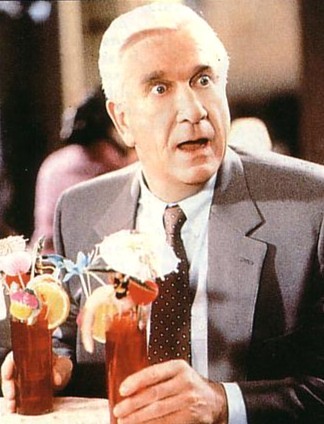
Leslie William Nielsen, (Regina, Canadá, 11 de febrero de 1926 - Fort Lauderdale, Estados Unidos, 28 de noviembre de 2010), fue un actor canadiense.
A finales de los años cuarenta, comenzó a interesarse por el mundo de la interpretación gracias a su tío Jean Hersholt, famoso actor del cine mudo. En sus primeros pasos en Hollywood, no consiguió trabajo alguno y regresó a su país natal, donde prosiguió sus estudios y trabajó para un canal de radio como disc-jockey. Pronto se dio cuenta de que en Canadá no tenía futuro y decidió volver a Hollywood, donde debutó como actor en el Actor's Studio. Allí intercambiaba consejos con un joven Marlon Brando. Pero eso cambió, y poco a poco fue encontrando su sitio, siendo El rey vagabundo su primera película, estrenada en 1956. En ese mismo año protagonizó, junto con Walter Pidgeon y Anne Francis, el clásico de ciencia ficción Planeta prohibido (1956).
Esa película le abrió nuevos horizontes, y en los años sesenta del
siglo pasado, se convirtió en el rey de la televisión, protagonizando
diversos dramas y ganándose la fama de ser el asesino o el malo de la
película. Pero la carrera de Leslie era irregular y poco a
poco se fue apagando. En 1971, participó en la película La aventura del Poseidón,
en la que interpreta al capitán del barco que se hunde. El éxito del
film no le ayudó; su carrera no se vio relanzada y su popularidad
decayó, al igual que su segundo matrimonio. Alisande y Leslie se
separaron en 1973,
tras más de diez años de matrimonio y dos hijas, Maura y Thea. Los
fracasos del actor provocaron que la pareja se separase.
En 1980 estrena con los ZAZ la comedia absurda «Airplane!» interpretando con enorme éxito al inexpresivo Doctor Rumack. El secreto de esa comedia que ha hecho historia está en utilizar actores serios que nunca habían actuado en comedias. Leslie Nielsen ya era conocido como el tipo que hacia buenas bromas, Gracias a Airplane!, recuperó y hasta gozó de una mayor popularidad.
En 1982, vuelve a trabajar con los ZAZ en la serie de televisión Escuadrón de policía («Police Squad!»), donde da vida al torpe teniente de policía Frank Drebin. Estaba pronosticado el éxito, sin embargo, fracasó, ya que había una gran competencia con otras series ya consolidadas en pantalla. Sólo tuvo una duración de seis episodios, a pesar de tener muy buena crítica y ser nominada a un premio Emmy.
Después de la decepción por la cancelación de la serie, sólo tuvo un papel destacado en el drama Loca, junto a Barbra Streisand.
En 1988 y de la mano del grupo ZAZ, se estrena «The Naked Gun» (La pistola desnuda, en España Agárralo como puedas), que supone un enorme éxito en recaudación y críticas. Leslie Nielsen volvía a interpretar al torpe teniente Frank Drebin después del fracaso de la serie. Sus compañeros de reparto en la película fueron Priscila Presley, George Kennedy y O. J. Simpson.
Durante los años noventa, hizo dos secuelas más de película y se convirtió en uno de los actores cómicos más populares del mundo. Tuvo el honor de participar en los dos últimos capítulos de la legendaria serie «Las chicas de oro» (The Golden Girls), donde se casa con el personaje interpretado por Bea Arthur. Además, participó en varios capítulos de la serie «Se ha escrito un crimen».
En 1998, trabaja de nuevo con el guionista de «The Naked Gun», Pat Proft, en «¡Vaya un fugitivo!», parodia de las películas el Fugitivo y Titanic, entre otras.
En el año 2000, protagoniza «2001: Despega como puedas» que, según él, es la peor película en la que había trabajado.
En 2003 David Zucker vuelve a llamarlo para participar en Scary Movie 3. Nielsen y Zucker volvían a reunirse en una película nueve años más tarde. Después de unos meses de rodar esa película, presta su voz para una serie de animación llamada Zeroman para la televisión canadiense.
Más tarde, firma para interpretar roles secundarios en Scary Movie 4 y Superhero Movie.
Su primer matrimonio fue con la también actriz Mónica Boyer; contrajeron nupcias en 1950 y se divorciaron seis años después. En 1962 se casó con Alisande Ullman, con quien tuvo dos hijas, Thea y Maura. La crisis que el actor vivió en los años setenta por su escaso y mal trabajo provocó la separación de la pareja en 1974. Durante el éxito de Aterriza como puedas, conoció a Brooks Oliver, con quien se casó en 1981; se divorciaron en 1983.
En ese mismo año, conoció a la mujer, Barbaree Earl. Decidieron consolidar su relación casándose en 2001.
Era embajador de la Unicef en Canadá y vivía en el Paradise Valley de Arizona. Además de sus trabajos como actor, no dudaba en ofrecer su apoyo a organizaciones de beneficencia, como en Ontario. En 2004 recibió un homenaje en la gala "So the World may Hear" por su ayuda humanitaria.
Mientras descansaba en Miami, recibió una llamada de la compañía española Ruiz Nicoli Líneas para crear la campaña publicitaria Nielsen Awards, donde eligió a Ruiz Nicoli Líneas como la mejor agencia de publicidad del mundo. Según los creadores, Nielsen apenas pidió dinero para hacerlo, ya que estaba encantado de trabajar con unas personas que sabían reírse de sí mismas.
En mayo se anunció que el Festival de Cine de Comedia de Peñíscola galardonaría al actor con un premio a toda su carrera. Por desgracia, se ausentó del festival debido a un problema en un rodaje en Canadá, aunque finalmente le fue concedido el premio Costa Azahar.
Su popularidad se mantuvo hasta su muerte y fue el rey de la publicidad en Phoenix, donde residía habitualmente y donde de vez en cuando era requerido por los gobernantes o empresas para hacer campañas de publicidad.
Fue considerado para el papel de Willy Wonka en Charlie y la fábrica de chocolate, aunque finalmente los productores prefirieron a un actor más joven, Johnny Depp.
Tenía una gran colección de coches clásicos.
Leslie William Nielsen, (Regina, Canadá, 11 de febrero de 1926 - Fort Lauderdale, Estados Unidos, 28 de noviembre de 2010), fue un actor canadiense.
Los Inicios.
Nació en Regina, Saskatchewan, (Canadá), donde pasó los primeros meses de su vida con su padre, originario de Dinamarca, y su madre, del País de Gales. La familia dejó la ciudad y se trasladó a los Territorios del Noroeste, cerca del círculo polar ártico, donde Leslie enfermó de raquitismo, que le dejó las piernas arqueadas y una característica forma de caminar.A finales de los años cuarenta, comenzó a interesarse por el mundo de la interpretación gracias a su tío Jean Hersholt, famoso actor del cine mudo. En sus primeros pasos en Hollywood, no consiguió trabajo alguno y regresó a su país natal, donde prosiguió sus estudios y trabajó para un canal de radio como disc-jockey. Pronto se dio cuenta de que en Canadá no tenía futuro y decidió volver a Hollywood, donde debutó como actor en el Actor's Studio. Allí intercambiaba consejos con un joven Marlon Brando. Pero eso cambió, y poco a poco fue encontrando su sitio, siendo El rey vagabundo su primera película, estrenada en 1956. En ese mismo año protagonizó, junto con Walter Pidgeon y Anne Francis, el clásico de ciencia ficción Planeta prohibido (1956).
Tras el fracaso como dramático le llega la carrera como cómico
A finales del 1979, era un actor casi olvidado, aunque pronto eso cambiaría, gracias a tres jóvenes directores: David Zucker, Jim Abrahams y Jerry Zucker, conocidos como el grupo ZAZ.En 1980 estrena con los ZAZ la comedia absurda «Airplane!» interpretando con enorme éxito al inexpresivo Doctor Rumack. El secreto de esa comedia que ha hecho historia está en utilizar actores serios que nunca habían actuado en comedias. Leslie Nielsen ya era conocido como el tipo que hacia buenas bromas, Gracias a Airplane!, recuperó y hasta gozó de una mayor popularidad.
En 1982, vuelve a trabajar con los ZAZ en la serie de televisión Escuadrón de policía («Police Squad!»), donde da vida al torpe teniente de policía Frank Drebin. Estaba pronosticado el éxito, sin embargo, fracasó, ya que había una gran competencia con otras series ya consolidadas en pantalla. Sólo tuvo una duración de seis episodios, a pesar de tener muy buena crítica y ser nominada a un premio Emmy.
Después de la decepción por la cancelación de la serie, sólo tuvo un papel destacado en el drama Loca, junto a Barbra Streisand.
En 1988 y de la mano del grupo ZAZ, se estrena «The Naked Gun» (La pistola desnuda, en España Agárralo como puedas), que supone un enorme éxito en recaudación y críticas. Leslie Nielsen volvía a interpretar al torpe teniente Frank Drebin después del fracaso de la serie. Sus compañeros de reparto en la película fueron Priscila Presley, George Kennedy y O. J. Simpson.
Durante los años noventa, hizo dos secuelas más de película y se convirtió en uno de los actores cómicos más populares del mundo. Tuvo el honor de participar en los dos últimos capítulos de la legendaria serie «Las chicas de oro» (The Golden Girls), donde se casa con el personaje interpretado por Bea Arthur. Además, participó en varios capítulos de la serie «Se ha escrito un crimen».
En el año 2000, protagoniza «2001: Despega como puedas» que, según él, es la peor película en la que había trabajado.
En 2003 David Zucker vuelve a llamarlo para participar en Scary Movie 3. Nielsen y Zucker volvían a reunirse en una película nueve años más tarde. Después de unos meses de rodar esa película, presta su voz para una serie de animación llamada Zeroman para la televisión canadiense.
Más tarde, firma para interpretar roles secundarios en Scary Movie 4 y Superhero Movie.
Vida privada
Su hermano Erik Nielsen (1924-2008) fue viceprimer ministro de Canadá en los años 80.Su primer matrimonio fue con la también actriz Mónica Boyer; contrajeron nupcias en 1950 y se divorciaron seis años después. En 1962 se casó con Alisande Ullman, con quien tuvo dos hijas, Thea y Maura. La crisis que el actor vivió en los años setenta por su escaso y mal trabajo provocó la separación de la pareja en 1974. Durante el éxito de Aterriza como puedas, conoció a Brooks Oliver, con quien se casó en 1981; se divorciaron en 1983.
En ese mismo año, conoció a la mujer, Barbaree Earl. Decidieron consolidar su relación casándose en 2001.
Era embajador de la Unicef en Canadá y vivía en el Paradise Valley de Arizona. Además de sus trabajos como actor, no dudaba en ofrecer su apoyo a organizaciones de beneficencia, como en Ontario. En 2004 recibió un homenaje en la gala "So the World may Hear" por su ayuda humanitaria.
Mientras descansaba en Miami, recibió una llamada de la compañía española Ruiz Nicoli Líneas para crear la campaña publicitaria Nielsen Awards, donde eligió a Ruiz Nicoli Líneas como la mejor agencia de publicidad del mundo. Según los creadores, Nielsen apenas pidió dinero para hacerlo, ya que estaba encantado de trabajar con unas personas que sabían reírse de sí mismas.
En mayo se anunció que el Festival de Cine de Comedia de Peñíscola galardonaría al actor con un premio a toda su carrera. Por desgracia, se ausentó del festival debido a un problema en un rodaje en Canadá, aunque finalmente le fue concedido el premio Costa Azahar.
Su popularidad se mantuvo hasta su muerte y fue el rey de la publicidad en Phoenix, donde residía habitualmente y donde de vez en cuando era requerido por los gobernantes o empresas para hacer campañas de publicidad.
Fue considerado para el papel de Willy Wonka en Charlie y la fábrica de chocolate, aunque finalmente los productores prefirieron a un actor más joven, Johnny Depp.
Tenía una gran colección de coches clásicos.
Fallecimiento
Leslie Nielsen ingresó en un hospital de Fort Lauderdale, Florida, donde estuvo cerca de 12 días por una neumonía, y falleció el 28 de noviembre de 2010 debido a las complicaciones de dicha enfermedad. Doug Nielsen, sobrino del actor, anunció a la emisora de radio CJOB que Nielsen había muerto mientras dormía alrededor de las 5:30 p.m. EST, rodeado de su familia y amigos.Filmografía selecta.
- 1956 - Planeta prohibido (Forbbiden Planet)
- 1956 - Sexo opuesto (Opposite Sex)
- 1956 - Rapto (Ransom!)
- 1958 - Furia en el valle (The Sheepman)
- 1968 - Una tumba al amanecer (Counterpoint)
- 1972 - La aventura del Poseidón (Capitán Harrison)
- 1977 - The Day of the Animals
- 1980 - Prom Night (1980)
- Airplane!
- España: ¡Aterriza como puedas!
- Hispanoamérica: ¿(Y) Dónde está el piloto?
- 1982 - Objetivo mortal (Wrong is Right)
- 1982 - Creepshow
- 1987 - Loca (Nuts)
- 1988 - The Naked Gun: From the Files of Police Squad!
- España: Agárralo como puedas
- Hispanoamérica: ¿(Y) Dónde está el policía?
- Argentina y Uruguay: La pistola desnuda
- 1990 - Repossessed
- España: Reposeída
- Hispanoamérica: ¿(Y) Dónde está el exorcista?
- 1991 - The Naked Gun 2½: The Smell of Fear
- España: Agárralo como puedas 2½: El aroma del miedo
- Hispanoamérica: ¿(Y) Dónde está el policía 2½?
- Argentina y Uruguay: La pistola desnuda 2½
- 1993 - Todo lo que quiero para Navidad (I want for Christmas)
- 1994 - The Naked Gun 33⅓: The Final Insult
- España: Agárralo como puedas 33⅓: El insulto final
- Hispanoamérica: ¿(Y) Dónde está el policía 33⅓?
- Argentina y Uruguay: La pistola desnuda 33⅓
- 1995 - Dracula Dead and Loving it
- España: Drácula, un muerto muy contento y feliz
- Argentina y Uruguay: Drácula, muerto pero feliz
- 1996 - Spy Hard
- España: Espía como puedas
- Hispanoamérica: Duro de espiar
- 1997 - Mr. Magoo
- 1997 - Acampa como puedas (Family plan)
- 1998 - Wrongfully Accused
- España: ¡Vaya un fugitivo!
- Hispanoamérica: Injustamente acusado
- 1999 - Camouflage
- 2000 - 2001: Despega como puedas (2001: Space Travesty)
- 2001 - Esquía como puedas (Kevin of the North)
- 2002 - Men with Brooms
- 2003 - Scary Movie 3
- 2006 - Scary Movie 4
- 2007 - Doctor*ology (Documental por capítulos)
- 2007 - Robson Arms (serie de TV)
- 2007 - Music Within
- 2007 - Lipshitz Saves the World (serie de TV, piloto)
- 2008 - Superhero Movie
- 2008 - An American Carol
- 2008 - El castañazo 3 (Slap Shot 3: The Junior League) (DVD)
- 2009 - Stan Helsing
- 2009 - Eastwick (serie de TV - 2 capítulos piloto)
- 2009 - Spanish Movie con nuestro chiquito de la calzada haciendo de un doctor algo loco como uno de sus últimas apariciones.
martes, 25 de diciembre de 2012
domingo, 4 de noviembre de 2012
Mark wahlberg, The model.
Mark Wahlberg pesa 163 libras,unos 81 kg y mide 5′ 7″ (170 cm)
nace un 5 June 1971, Dorchester, Boston, Massachusetts, USA
nombre original Mark Robert Michael Wahlberg
Nickname Marky Mark
Mark Robert Michael Wahlberg es un actor Americano, y producer, y former rapper.
Hermano menor 9 hermanos entre ellos de Arthur Wahlberg, Donnie Wahlberg and Robert Wahlberg.A los 11 años sufrió con el divorcio de sus padres una cajera de banca y un camionero.
Dated actress Jordana Brewster for several years [1998-2001].
Lleva un tattoo de Bob Marley en su hombro izquierdo y tiene otros tres más.
Su abuelo paterno era sueco y su abuela paterna era irlandesa, y su madre es de ascendencia inglesa, franco-canadiense e irlandesesa.2 Hizo el bachillerato en Copley Square High School en Newbury Street en Boston.
De adolescente, Mark se rompió la rodilla mientras patinaba con su mejor amigo Alexander Ortiz y se lesionó cuatro meses. Tras diversos actos de delincuencia, hirió a un ciudadano de origen vietnamita y fue a la cárcel donde estuvo un par de meses. Wahlberg negó que el delito hubiese sido provocado por racismo.
Durante su condena reflexionó sobre su estilo de vida y tras abandonar la cárcel, decidió dejar atrás su conflictivo pasado.
Obtuvo fama por primera vez por ser el hermano de Donnie Wahlberg, quien fuera el líder de la banda de música pop adolescente New Kids on the Block. Animado por el éxito de su hermano en el mundo de la música, Mark comenzó a grabar como Marky Mark & the Funky Bunch, grupo de rap que lideró y que obtuvo éxitos con Good Vibrations (nº 1 en EE. UU.) y Wild Side de su disco Music for the People. Fue calificado de sex symbol por su físico musculado, si bien se vio envuelto en polémicas por sus actuaciones provocativas. En alguna ocasión, mostró sus nalgas desde el escenario. Su segundo LP, You Gotta Believe, fue un fracaso, lo que le desmotivo .
Al mismo tiempo que su trayectoria como cantante, Mark trabajó como modelo publicitario y se le vio en una serie de anuncios de ropa interior de la firma Calvin Klein, junto a Kate Moss, que fueron muy comentados por su exuberancia física. En 1992 Mark fue elegido como una de las 50 personas más bellas del mundo por la revista People, en un conteo de la cadena de tv VH1 quedó en el puesto 65 de los 100 artistas más sexys y en otro conteo de este canal fue elegido el #1 de los "mayores encantos de los 90" ganándole a celebridades como Brad Pitt, George Clooney, Cameron Diaz y Pamela Anderson.
Debutó en el cine en 1994 en la película Un poeta entre reclutas, protagonizada por Danny DeVito, y al año siguiente rodó, junto a Leonardo DiCaprio, Diario de un rebelde. A partir de Boogie Nights, Mark dejó a los críticos impresionados por su gran surtido de interpretaciones y habilidades.
Unos datos curiosos de la carrera de Mark es que rechazó papeles de éxito como el de Linus Caldwell en la película Ocean's Eleven (el cual fue interpretado por Matt Damon), también el de Ennis Del Mar en Brokeback Mountain (personaje que fue interpretado por el recordado actor Heath Ledger) y también rechazó el papel protagonista de la película Assault on Precinct 13 (Asalto al Distrito 13). Igualmente, decidió no realizar la segunda parte de The Departed, que había dirigido Martin Scorsese; al final de esta película, Dignam (el personaje interpretado por Mark) era el único protagonista superviviente. La película The Departed, con la participación de Jack Nicholson y protagonizada por Leonardo DiCaprio y Matt Damon, le valió a Mark una nominación a mejor actor secundario en los Globos de oro y a mejor actor secundario en los Premios Óscar.
Participó en 2001 en la película La tormenta perfecta, en el papel de Bobby Shatford, donde figuró en junto a George Clooney. También en 2001 protagonizó Rockstar interpretando a Chris Cole, actuando junto a artistas de la talla de Zakk Wylde.
El mejor salario de Mark fue el de 10 millones de dólares que obtuvo por su papel protagonista en la nueva versión de El planeta de los simios. Se rumorea que a partir de 2009 empezaría a cobrar entre 12 y 15 millones de dólares por película.
Produjo durante ocho temporadas la serie Entourage de la cadena de televisión HBO, la cual está ligeramente basada en eventos de su propia vida. Mark tuvo apariciones en la serie en el primer episodio y en el segundo episodio de la quinta temporada de la serie además de las sesiones con Mark Wahlberg en las cuales entrevista al elenco y la producción de la serie. También es productor ejecutivo de la serie Boardwalk Empire, también de HBO, y declaró que fue él quien convenció a Martin Scorsese para realizarla.3
Mark tiene una estrella en el Paseo de la Fama de Hollywood4

Por la vida sentimental y la alcoba de Wahlberg han pasado mujeres conocidas mundialmente como Reese Witherspoon, Sofía Vergara, Jessica Alba, Jordana Brewster, China Chow, Charlize Theron, Tara Reid, Shannen Doherty, Gwyneth Paltrow la estrella porno Savannah Shannon y las modelos Rachel Hunter, Frida Andersson, Jaime Rishar, Cynthia Kirchner entre muchas otras.
Un suceso importante de su vida es que Mark fue uno de los supervivientes del ataque a las torres gemelas del 11 de septiembre, ya que Mark estaba programado como pasajero para el vuelo 93 de United Airlines, pero por cosas del destino decidió no ir al aeropuerto a tomar el vuelo, y en cambio decidió en el último minuto dirigirse al Festival Internacional de Cine de Toronto. A Mark no le agrada hablar de este hecho.
nace un 5 June 1971, Dorchester, Boston, Massachusetts, USA
nombre original Mark Robert Michael Wahlberg
Nickname Marky Mark
Mark Robert Michael Wahlberg es un actor Americano, y producer, y former rapper.
Hermano menor 9 hermanos entre ellos de Arthur Wahlberg, Donnie Wahlberg and Robert Wahlberg.A los 11 años sufrió con el divorcio de sus padres una cajera de banca y un camionero.
Dated actress Jordana Brewster for several years [1998-2001].
Lleva un tattoo de Bob Marley en su hombro izquierdo y tiene otros tres más.
Su abuelo paterno era sueco y su abuela paterna era irlandesa, y su madre es de ascendencia inglesa, franco-canadiense e irlandesesa.2 Hizo el bachillerato en Copley Square High School en Newbury Street en Boston.
De adolescente, Mark se rompió la rodilla mientras patinaba con su mejor amigo Alexander Ortiz y se lesionó cuatro meses. Tras diversos actos de delincuencia, hirió a un ciudadano de origen vietnamita y fue a la cárcel donde estuvo un par de meses. Wahlberg negó que el delito hubiese sido provocado por racismo.
Durante su condena reflexionó sobre su estilo de vida y tras abandonar la cárcel, decidió dejar atrás su conflictivo pasado.
Obtuvo fama por primera vez por ser el hermano de Donnie Wahlberg, quien fuera el líder de la banda de música pop adolescente New Kids on the Block. Animado por el éxito de su hermano en el mundo de la música, Mark comenzó a grabar como Marky Mark & the Funky Bunch, grupo de rap que lideró y que obtuvo éxitos con Good Vibrations (nº 1 en EE. UU.) y Wild Side de su disco Music for the People. Fue calificado de sex symbol por su físico musculado, si bien se vio envuelto en polémicas por sus actuaciones provocativas. En alguna ocasión, mostró sus nalgas desde el escenario. Su segundo LP, You Gotta Believe, fue un fracaso, lo que le desmotivo .
Al mismo tiempo que su trayectoria como cantante, Mark trabajó como modelo publicitario y se le vio en una serie de anuncios de ropa interior de la firma Calvin Klein, junto a Kate Moss, que fueron muy comentados por su exuberancia física. En 1992 Mark fue elegido como una de las 50 personas más bellas del mundo por la revista People, en un conteo de la cadena de tv VH1 quedó en el puesto 65 de los 100 artistas más sexys y en otro conteo de este canal fue elegido el #1 de los "mayores encantos de los 90" ganándole a celebridades como Brad Pitt, George Clooney, Cameron Diaz y Pamela Anderson.
Debutó en el cine en 1994 en la película Un poeta entre reclutas, protagonizada por Danny DeVito, y al año siguiente rodó, junto a Leonardo DiCaprio, Diario de un rebelde. A partir de Boogie Nights, Mark dejó a los críticos impresionados por su gran surtido de interpretaciones y habilidades.
Unos datos curiosos de la carrera de Mark es que rechazó papeles de éxito como el de Linus Caldwell en la película Ocean's Eleven (el cual fue interpretado por Matt Damon), también el de Ennis Del Mar en Brokeback Mountain (personaje que fue interpretado por el recordado actor Heath Ledger) y también rechazó el papel protagonista de la película Assault on Precinct 13 (Asalto al Distrito 13). Igualmente, decidió no realizar la segunda parte de The Departed, que había dirigido Martin Scorsese; al final de esta película, Dignam (el personaje interpretado por Mark) era el único protagonista superviviente. La película The Departed, con la participación de Jack Nicholson y protagonizada por Leonardo DiCaprio y Matt Damon, le valió a Mark una nominación a mejor actor secundario en los Globos de oro y a mejor actor secundario en los Premios Óscar.
Participó en 2001 en la película La tormenta perfecta, en el papel de Bobby Shatford, donde figuró en junto a George Clooney. También en 2001 protagonizó Rockstar interpretando a Chris Cole, actuando junto a artistas de la talla de Zakk Wylde.
El mejor salario de Mark fue el de 10 millones de dólares que obtuvo por su papel protagonista en la nueva versión de El planeta de los simios. Se rumorea que a partir de 2009 empezaría a cobrar entre 12 y 15 millones de dólares por película.
Produjo durante ocho temporadas la serie Entourage de la cadena de televisión HBO, la cual está ligeramente basada en eventos de su propia vida. Mark tuvo apariciones en la serie en el primer episodio y en el segundo episodio de la quinta temporada de la serie además de las sesiones con Mark Wahlberg en las cuales entrevista al elenco y la producción de la serie. También es productor ejecutivo de la serie Boardwalk Empire, también de HBO, y declaró que fue él quien convenció a Martin Scorsese para realizarla.3
Mark tiene una estrella en el Paseo de la Fama de Hollywood4

Vida privada.
Wahlberg tiene cuatro hijos con Rhea Durham: su hija Ella Rae nacida el 2 de septiembre de 2003 y su hijo Michael, nacido el 22 de marzo de 2006, Brandan Joseph nacido el 16 de septiembre de 2008 Margaret Greace nacida el11 de enero de 2010.5 Wahlberg es un católico practicante. Por ese motivo se casó con la madre de sus cuatro hijos el 1 de agosto de 2009 en Beverly Hills, en la Iglesia Católica Good Shepherd.6 7Por la vida sentimental y la alcoba de Wahlberg han pasado mujeres conocidas mundialmente como Reese Witherspoon, Sofía Vergara, Jessica Alba, Jordana Brewster, China Chow, Charlize Theron, Tara Reid, Shannen Doherty, Gwyneth Paltrow la estrella porno Savannah Shannon y las modelos Rachel Hunter, Frida Andersson, Jaime Rishar, Cynthia Kirchner entre muchas otras.
Un suceso importante de su vida es que Mark fue uno de los supervivientes del ataque a las torres gemelas del 11 de septiembre, ya que Mark estaba programado como pasajero para el vuelo 93 de United Airlines, pero por cosas del destino decidió no ir al aeropuerto a tomar el vuelo, y en cambio decidió en el último minuto dirigirse al Festival Internacional de Cine de Toronto. A Mark no le agrada hablar de este hecho.
Discografía
Filmografía
| Año | Título | Papel |
| 2012 | Ted (película) | John Bennett |
| 2012 | Contraband | Chris Farraday |
| 2010 | The Fighter | 'Irish' Mickey Ward |
| 2010 | The Other Guys | Detective Terry Hoitz |
| 2010 | Date Night | Hoollbrook |
| 2009 | The Lovely Bones | Jack Salmon |
| 2008 | Max Payne | Max Payne |
| 2008 | The Happening | Elliot Moore |
| 2008 | We Own the Night | Joseph Grusinsky |
| 2007 | Shooter | Bob Lee Swagger |
| 2006 | Invencible | Vince Papale |
| 2006 | The Departed | Dignam |
| 2005 | Cuatro hermanos (Four Brothers) | Bobby Mercer |
| 2004 | I Heart Huckabees | Tommy Corn |
| 2003 | The Italian Job | Charlie Croker |
| 2002 | La verdad sobre Charlie (The Truth About Charlie) | Joshua Peters |
| 2001 | Rockstar | Chris 'Izzy' Cole |
| 2001 | El planeta de los simios (Planet of the Apes) | Capitán Leo Davidson |
| 2000 | La tormenta perfecta (The Perfect Storm) | Bobby Shatford |
| 2000 | The Yards | Leo Handler |
| 1999 | Tres reyes (Three KIngs) | Troy Barlow |
| 1999 | The Corruptor | Danny Wallace |
| 1998 | Equipo mortal (The Big Hit) | Melvin Smiley |
| 1997 | Boogie Nights | Eddie Adams/Dirk Diggler |
| 1997 | Traveller | Pat O'Hara |
| 1996 | Fear | David McCall |
| 1995 | Diario de un rebelde (The Basketball Diaries) | Mickey |
| 1994 | Un poeta entre reclutas (Renaissance Man) | Tommy Lee Haywood |
| 1993 | La profesora (The Substitute) | Ryan Westerberg |
Premios nominado.
Oscar
| Año | Categoría | Película | Resultado |
|---|---|---|---|
| 2007 | Mejor Actor de Reparto | The Departed | Candidato |
Globos de Oro
| Año | Categoría | Película | Resultado |
|---|---|---|---|
| 2011 | Mejor Actor - Drama | The Fighter | Candidato |
| 2007 | Mejor Actor de Reparto | The Departed | Candidato |
domingo, 7 de octubre de 2012
Christian Slater el eterno chico juvenil del cine.
Christian Slater de verdadero nombre:Christian Michael Leonard Hawkins nacio el 18 de agosto de 1969, es un conocido actor estadounidense. Asistió para su educación al prestigioso Dalton School y al Professional Children School. Su debut en escenario fue a la edad de 9 años en The Music Man con Dick Van Dyke(famoso por cantar Chity,chity,bang,bang).
Es hijo de una famosa directora de casting, Mary Jo Slater, comenzó a trabajar a los nueve años en Broadway (The Music Man) y participó en obras,tanto del drama como en la comedia.
 Su debut en cine fue en La leyenda de Billie Jean (1985), pero su reconocimiento llegó con su siguiente film, El nombre de la rosa (1986)donde hizo un creible papel de novicio de Adso de Melk al lado de Fray Sean Connery. A partir de este momento se le abrieron las puertas y fue protagonista de una serie de películas juveniles ochenteras de las cuales que se destacaban por la banda sonora, como Beastie Boys, Escuela de jovenes asesinos (1989, junto a Winona Ryder), Rebelión en las Ondas, (Pump Up the Volume, 1990). Sus últimos grandes éxitos son Amor a quemarropa de Tony Scott, y Entrevista con el vampiro de Neil Jordan, al lado de Tom Cruise y A.Banderas, y la película de windtalkers en su papel de Sgt. Pete 'Ox' Anderson
De Christian Slater se conoce que está divorciado de Ryan Hadon, una conocida productora de TV. El motivo del divorcio, según el actor en el juicio, fueron divergencias sin solución. Con ella tiene un hijo y una hija por los que ha pedido la custodia compartida al tribunal, cuya resolución aún está pendiente.
Ha tenido algunos problemas con la ley que han dañado su imagen de estrella por alcoholismo, drogas y violencia. Por esta divergencia con la ley pasó algunos meses en la cárcel. Para reconducir su carrera se ha iniciado como productor de films con películas como Hard Rain (1997), dirigida por Mikael Salomón, o Very Bad Things (1998) de Peter Berg, una comedia de humor negro.
En 1994, fue arrestado por llevar un arma en un avión. En 1997 fue arrestado por atacar a su novia y a un oficial de policía cuando estaba bajo los efectos de la cocaína durante una fiesta en Los Ángeles, siendo sentenciado a 90 días en prisión al no admitir ni negar su culpabilidad. El 31-05-2005 el actor fue acusado de abuso sexual después de, presuntamente, manosear el trasero de una dama mientras estaba borracho, según los informes de la policía. Fue arrestado en la madrugada en el Upper East Side de Nueva York y fue registrado como un delito menor de abuso sexual. En caso de ser condenado, se enfrenta a 60 días de prisión.
En Enero del 2011 Christian sufrio un rumor dañino como muchos otros famosos, de que había sido victima de una leyenda urbana o Hoax en la que el actor supuestamente tuvo un accidente mortal cuando esquiaba en Zermatt (Suiza).
Filmografía:
(2012) Bullet to the Head
(2012) Soliders of Fortune
(2011) Sacrifice
(2011) Breaking in (Oz)
(2009) Dolan's Cadillac (Jimmy Dolan)
(2008) Lies & Illusions (Wes Wilson)
(2008) Igor (voz)
(2008) Love Lies Bleeding (Pollen)
(2007) The Ten Commandments (voz, Moses)
(2007) He Was a Quiet Man (Bob Maconel)
(2007) Slipstream (Ray)
(2006) Bobby (Daryl Timmons)
(2006) El Hombre sin sombra 2 (Michael Griffin)
(2005) Alone in the Dark (Edward Carnby)
(2004) Cazadores de Mentes (J.D. Reston)
(2004) Secreto de confesión (The Good Shepherd) - (Daniel Clemens)
(2004) Perseguido (2004) (Vincent Palmer)
(2003) Anónimos (Chico)
(2002) Códigos de guerra - Windtalkers (Ox)
(2002) Dinero Sucio (Taylor)
(2001) Los Reyes del Crimen (Hanson)
(2000) Candidata al poder (Rep. Reginald Webster)
(1998) Very Bad Things (Robert Boy)
(1997) Hard Rain (Tom)
(1997) Las Lágrimas de Julian Po (Julian Po)
(1996) Broken Arrow: Alarma Nuclear (Capitán Riley Hale)
(1996) Mil ramos de Rosas (Lewis Farrell)
(1995) Murder in the First (James Stamphill)
(1994) Entrevista con el Vampiro (Daniel)
(1993) Amor a quemarropa (Clarence)
(1993) Corazón indomable (Adam)
(1992) Kuffs, poli por casualidad (George Kuffs)
(1991) Robin Hood, príncipe de los ladrones (Will Scarlett)
(1991) El imperio del mal (Lucky Luciano)
(1990) suban el volumen [pump up the volume](Mark Hunter)
(1990) Intrépidos Forajidos (Arkansas Dave Rudabaugh)
(1990) Tales from the Darkside: The Movie (Andy)
(1989) Escuela de Jóvenes Asesinos (Jason 'J.D.' Dean
(1988) Al Filo del Abismo Gleaming the Cube (Brian Kelly)
(1988) Tucker, un hombre y su sueño (Junior Tucker)
(1986) El nombre de la rosa (Adso von Melk)
(1985) The Legend of Billie Jean (Binx Davy)
Este estará en una nueva serie de la cadena NBC de la que ya se sabe que se tratará de una serie de espionaje al estilo de las películas isnpiradas por Jason Bourne en la gran pantalla.
Este nuevo drama además fué anunciado por la NBC como si “El caso Bourne se mezclara con Jeckyll y Hide” . Slater dará vida pues, a un padre de familia que descubre que su alter-ego es un espía.
El protagonista que siempre había declinado aparecer como protagonista en series de televisión, de hecho sólo había aparecido como estrella invitada en series como El ala Oeste de la Casa Blanca ,Alias o Me llamo Earl
No fué hasta el año pasado cuando decidió protagonizar Dirty Little Secrets otro drama de la NBC, que no acabó pasando la primera fase de prueba por lo que ahora Slater ha decidido volver con esta nueva serie, que esperémos estrene en breve su piloto.
Su debut en cine fue en La leyenda de Billie Jean (1985), pero su reconocimiento llegó con su siguiente film, El nombre de la rosa (1986)donde hizo un creible papel de novicio de Adso de Melk al lado de Fray Sean Connery. A partir de este momento se le abrieron las puertas y fue protagonista de una serie de películas juveniles ochenteras de las cuales que se destacaban por la banda sonora, como Beastie Boys, Escuela de jovenes asesinos (1989, junto a Winona Ryder), Rebelión en las Ondas, (Pump Up the Volume, 1990). Sus últimos grandes éxitos son Amor a quemarropa de Tony Scott, y Entrevista con el vampiro de Neil Jordan, al lado de Tom Cruise y A.Banderas, y la película de windtalkers en su papel de Sgt. Pete 'Ox' Anderson
De Christian Slater se conoce que está divorciado de Ryan Hadon, una conocida productora de TV. El motivo del divorcio, según el actor en el juicio, fueron divergencias sin solución. Con ella tiene un hijo y una hija por los que ha pedido la custodia compartida al tribunal, cuya resolución aún está pendiente.
Ha tenido algunos problemas con la ley que han dañado su imagen de estrella por alcoholismo, drogas y violencia. Por esta divergencia con la ley pasó algunos meses en la cárcel. Para reconducir su carrera se ha iniciado como productor de films con películas como Hard Rain (1997), dirigida por Mikael Salomón, o Very Bad Things (1998) de Peter Berg, una comedia de humor negro.
En 1994, fue arrestado por llevar un arma en un avión. En 1997 fue arrestado por atacar a su novia y a un oficial de policía cuando estaba bajo los efectos de la cocaína durante una fiesta en Los Ángeles, siendo sentenciado a 90 días en prisión al no admitir ni negar su culpabilidad. El 31-05-2005 el actor fue acusado de abuso sexual después de, presuntamente, manosear el trasero de una dama mientras estaba borracho, según los informes de la policía. Fue arrestado en la madrugada en el Upper East Side de Nueva York y fue registrado como un delito menor de abuso sexual. En caso de ser condenado, se enfrenta a 60 días de prisión.
En Enero del 2011 Christian sufrio un rumor dañino como muchos otros famosos, de que había sido victima de una leyenda urbana o Hoax en la que el actor supuestamente tuvo un accidente mortal cuando esquiaba en Zermatt (Suiza).
Filmografía:
(2012) Bullet to the Head
(2012) Soliders of Fortune
(2011) Sacrifice
(2011) Breaking in (Oz)
(2009) Dolan's Cadillac (Jimmy Dolan)
(2008) Lies & Illusions (Wes Wilson)
(2008) Igor (voz)
(2008) Love Lies Bleeding (Pollen)
(2007) The Ten Commandments (voz, Moses)
(2007) He Was a Quiet Man (Bob Maconel)
(2007) Slipstream (Ray)
(2006) Bobby (Daryl Timmons)
(2006) El Hombre sin sombra 2 (Michael Griffin)
(2005) Alone in the Dark (Edward Carnby)
(2004) Cazadores de Mentes (J.D. Reston)
(2004) Secreto de confesión (The Good Shepherd) - (Daniel Clemens)
(2004) Perseguido (2004) (Vincent Palmer)
(2003) Anónimos (Chico)
(2002) Códigos de guerra - Windtalkers (Ox)
(2002) Dinero Sucio (Taylor)
(2001) Los Reyes del Crimen (Hanson)
(2000) Candidata al poder (Rep. Reginald Webster)
(1998) Very Bad Things (Robert Boy)
(1997) Hard Rain (Tom)
(1997) Las Lágrimas de Julian Po (Julian Po)
(1996) Broken Arrow: Alarma Nuclear (Capitán Riley Hale)
(1996) Mil ramos de Rosas (Lewis Farrell)
(1995) Murder in the First (James Stamphill)
(1994) Entrevista con el Vampiro (Daniel)
(1993) Amor a quemarropa (Clarence)
(1993) Corazón indomable (Adam)
(1992) Kuffs, poli por casualidad (George Kuffs)
(1991) Robin Hood, príncipe de los ladrones (Will Scarlett)
(1991) El imperio del mal (Lucky Luciano)
(1990) suban el volumen [pump up the volume](Mark Hunter)
(1990) Intrépidos Forajidos (Arkansas Dave Rudabaugh)
(1990) Tales from the Darkside: The Movie (Andy)
(1989) Escuela de Jóvenes Asesinos (Jason 'J.D.' Dean
(1988) Al Filo del Abismo Gleaming the Cube (Brian Kelly)
(1988) Tucker, un hombre y su sueño (Junior Tucker)
(1986) El nombre de la rosa (Adso von Melk)
(1985) The Legend of Billie Jean (Binx Davy)
Este estará en una nueva serie de la cadena NBC de la que ya se sabe que se tratará de una serie de espionaje al estilo de las películas isnpiradas por Jason Bourne en la gran pantalla.
Este nuevo drama además fué anunciado por la NBC como si “El caso Bourne se mezclara con Jeckyll y Hide” . Slater dará vida pues, a un padre de familia que descubre que su alter-ego es un espía.
El protagonista que siempre había declinado aparecer como protagonista en series de televisión, de hecho sólo había aparecido como estrella invitada en series como El ala Oeste de la Casa Blanca ,Alias o Me llamo Earl
No fué hasta el año pasado cuando decidió protagonizar Dirty Little Secrets otro drama de la NBC, que no acabó pasando la primera fase de prueba por lo que ahora Slater ha decidido volver con esta nueva serie, que esperémos estrene en breve su piloto.

viernes, 7 de septiembre de 2012
John Voight, un viejo cawboy de medianoche.
Jonathan Vincent Voight (nacido un 29 de diciembre de 1938, en Yonkers), es conocido cómo Jon Voight, es un actor neoyorkino, además de ser guionista, director de televisión y productor ejecutivo. Es conocido por sus papeles en Cowboy de medianoche, El regreso, Defensa, Conrack, El tren del infierno o Ali. Ganó un Oscar en 1979 cómo mejor actor principal en la dramática película sobre los veteranos de vietnam en El regreso y tres Globos de Oro en 1970, 1979 y 1986. Es el padre de Angelina Jolie y James Haven.
 Su padre fue el jugador profesional de golf Elmer Voight, cuyo apellido original era Voytka, y de Bárbara Voight, ambos de ascendencia alemana y eslovaca, Jon Voight tiene dos hermanos: el profesor de geología Barry Voight y el músico y compositor Wes Voight,conocido cómo Chip Taylor. Estudió en Archbishop Stepinac High School (White Plains, Nueva York) y se graduó en 1956, aunque continuó sus estudios en la Universidad Católica de América (Washington) y se graduó con el título de Bachelor of Arts en 1960.
Se volvió a New york para iniciar su carrera cómo actor. Encontró un papel reemplazando a uno de los actores del musical The Sound of Music, donde conoció a la que sería su futura mujer y con la que se casaría en 1962, la también actriz Lauri Peters. Entre 1963 y 1969 participó en nueve series de televisión y dos películas, además de dos obras de teatro entre 1965 y 1967. Consiguió dar el salto a la fama interpretando a Joe Buck en Cowboy de medianoche (1969), junto a Dustin Hoffman. Ese mismo año se divorció de Lauri Peters.
Durante los años 70 trabajó a las órdenes de Mike Nichols, John Boorman, Martin Ritt, Franco Zeffirelli y Hal Ashby. En el último año de la década ganó el Oscar por su papel en El regreso. Además, en 1971 se casó con la modelo y actriz Marcheline Bertrand, madre de James Haven Voight y Angelina Jolie Voight.
En la década de 1980, participó en cinco largometrajes, siendo el filme El tren del infierno, (1985) del director Andrei Konchalovsky, le haría ganar un Globo de Oro 1986 al mejor actor cinematográfico, género dramatico. También participó en los guiones de los filmes Lookin' to Get Out (1982), y Eternity (1989).
En la década de 1990 actuó en siete telefilmes, una serie de televisión y 12 largometrajes, siendo su primer trabajo en televisión Chernobyl: The Final Warning en 1991, seguido de The Last of his Tribe en 1992. La década también tuvo altibajos en su carrera profesional. En 1998 fue candidato al Premio Golden Raspberry conocido como Premio Razzie: al peor actor, por Anaconda, y al peor actor secundario por Enemigo público, y U Turn. Para compensar, también recibió ese año el premio Globo de Oro al mejor actor secundario de cine, por The Rainmaker.
Es conocido que participa activamente en política, apoyando al Partido Republicano, tal vez por dicha causa en los últimos años se la podido ver en papeles de personajes como F.D.Rossbelt,Juan Pablo II,ministro de defensa en Tansformers o George Washington.

Se volvió a New york para iniciar su carrera cómo actor. Encontró un papel reemplazando a uno de los actores del musical The Sound of Music, donde conoció a la que sería su futura mujer y con la que se casaría en 1962, la también actriz Lauri Peters. Entre 1963 y 1969 participó en nueve series de televisión y dos películas, además de dos obras de teatro entre 1965 y 1967. Consiguió dar el salto a la fama interpretando a Joe Buck en Cowboy de medianoche (1969), junto a Dustin Hoffman. Ese mismo año se divorció de Lauri Peters.
Durante los años 70 trabajó a las órdenes de Mike Nichols, John Boorman, Martin Ritt, Franco Zeffirelli y Hal Ashby. En el último año de la década ganó el Oscar por su papel en El regreso. Además, en 1971 se casó con la modelo y actriz Marcheline Bertrand, madre de James Haven Voight y Angelina Jolie Voight.
En la década de 1980, participó en cinco largometrajes, siendo el filme El tren del infierno, (1985) del director Andrei Konchalovsky, le haría ganar un Globo de Oro 1986 al mejor actor cinematográfico, género dramatico. También participó en los guiones de los filmes Lookin' to Get Out (1982), y Eternity (1989).
En la década de 1990 actuó en siete telefilmes, una serie de televisión y 12 largometrajes, siendo su primer trabajo en televisión Chernobyl: The Final Warning en 1991, seguido de The Last of his Tribe en 1992. La década también tuvo altibajos en su carrera profesional. En 1998 fue candidato al Premio Golden Raspberry conocido como Premio Razzie: al peor actor, por Anaconda, y al peor actor secundario por Enemigo público, y U Turn. Para compensar, también recibió ese año el premio Globo de Oro al mejor actor secundario de cine, por The Rainmaker.
Es conocido que participa activamente en política, apoyando al Partido Republicano, tal vez por dicha causa en los últimos años se la podido ver en papeles de personajes como F.D.Rossbelt,Juan Pablo II,ministro de defensa en Tansformers o George Washington.
Filmografía
Películas
Series de TV
| Año | Serie | Personaje | Capítulos | Creador |
|---|---|---|---|---|
| 2009 | 24 | Jonas Hodges | 10 | Robert Cochran Joel Surnow |
| 2010 | Lone Star | Clint Thatcher | 5 | Kyle Killen |
Como guionista
- Lookin’ to Get Out (1982). De Hal Ashby
Premios
Óscar
| Año | Categoría | Película | Resultado |
|---|---|---|---|
| 2001 | Mejor Actor de Reparto | Alí | Candidato |
| 1985 | Mejor Actor | El tren del infierno | Candidato |
| 1978 | Mejor Actor | El regreso | Ganador |
| 1969 | Mejor Actor | Cowboy de medianoche | Candidato |
Globos de Oro
| Año | Categoría | Película | Resultado |
|---|---|---|---|
| 2002 | Mejor Actor de Reparto | Alí | Nominado |
| 1998 | Mejor Actor de Reparto | Legítima defensa | Nominado |
| 1986 | Mejor Actor - Drama | El tren del infierno | Ganador |
| 1980 | Mejor Actor - Drama | El campeón | Nominado |
| 1979 | Mejor Actor - Drama | El regreso | Ganador |
| 1973 | Mejor Actor - Drama | Deliverance | Nominado |
| 1970 | Nueva Estrella del Año - Actor | Cowboy de medianoche | Ganador |
BAFTA
| Año | Categoría | Película | Resultado |
|---|---|---|---|
| 1970 | Nueva promesa | Midnight Cowboy | Ganador |
sábado, 18 de agosto de 2012
Groucho Marx
Julius Henry Marx, es el nombre de Groucho Marx (nacio en Nueva York, un 2 de octubre de 1890 - fallecido en Los Ángeles, 19 de agosto de 1977) fue un actor, comediante de circo y escritor estadounidense, conocido principalmente por ser uno de los miembros de los Hermanos Marx.
Creció en en el seno de una familia pobre de inmigrantes alemanes judíos. Su madre era Miene (Minnie) Schoenberg (1864-1929) que emigró a Estados Unidos desde Alemania junto a sus padres y sus hermanos. Su padre era Simon (Samuel) Marx (nacido como Marrix) (1860-1933), inmigrante alemán, nacido en Alsacia cuando formaba parte de Francia y anexada posteriormente al Imperio Alemán en 1871, con lo que Samuel pasó de ser ciudadano francés a ciudadano alemán.
 Groucho debutó en el mundo del espectáculo a los 15 años como cantante solista. Pasado algún tiempo comenzó a actuar junto a sus hermanos en el vodevil y el circo, primero en tríos o cuartetos musicales y finalmente en revistas. La obra Cocoanuts, interpretada de 1925 a 1928, dio a los Marx su oportunidad en Broadway. A raíz de este éxito, y tras olvidar su infructuoso rodaje de una primera y perdida película muda del año 1921 llamada "Humor Risk", firmaron un acuerdo con la productora de cine Paramount, con la que hicieron varias películas de moderado éxito, como "Los cuatro cocos", "Plumas de caballo" y "Sopa de ganso", entre otras.
Tras salir de la Paramount, y gracias al productor Irving G. Thalberg, los hermanos Marx comenzaron a trabajar con la Metro Goldwyn Mayer, de donde rodaron sus mejores películas como "Una noche en la ópera" y "Un día en las carreras". En los 50 cada uno de los tres hermanos continuó trabajando independientemente en radio, televisión y cine, siendo Groucho el que más éxito cosechó, gracias a su faceta como escritor y sobre todo gracias a su programa televisivo "Apueste su vida", con el que se hizo realmente famoso en los Estados Unidos entre una generación de personas que nunca lo habían visto en el teatro y que apenas lo conocían de alguna de sus viejas películas.
Groux Marx dejo su vis cómica famosa como recuerdo así como sus absurdas frases sin sentido, falleció en Los Ángeles a causa de una neumonía, dejando atrás tres ex-esposas, Ruth, Kay y Eden, tres hijos, Arthur, Miriam y Melinda, 18 películas, 14 de ellas junto a sus hermanos, y millones de admiradores. Una de sus célebres frases fue: "No deseo pertenecer a ningún club que acepte como socio a alguien como yo". Groucho Marx fue incinerado, sus cenizas se guardan en el Eden Memorial Park, siendo falso el epitafio "Perdonen que no me levante" que popularmente se creía que estaba en su tumba.Una estrella judia esta en su nicho.
Las Películas de los cuatro Hermanos Marx
Humor Risk (1921) (sólo se conservan unos pocos fragmentos)
Los cuatro cocos (1929)
El conflicto de los Marx (1930)
Pistoleros de agua dulce (1931)
Plumas de caballo (1932)
Sopa de ganso (1933)
Películas de los tres Hermanos Marx (sin Zeppo el alto y estirado del grupo)
Una noche en la ópera (1935)
Un día en las carreras (1937)
El hotel de los líos (1938)
Una tarde en el circo (1939)
Los Hermanos Marx en el Oeste (1940)
Tienda de locos (1941)
Una noche en Casablanca (1946)
Amor en conserva (1949)
La historia de la humanidad (1957) (aparecen por separado, no se considera una película propia de los Hermanos Marx)
Películas en solitario
Las gafas redondas, las cejas gruesas, el bigote y el habano.
Copacabana (1947) de Alfred E. Green
Double Dynamite (1951)
Una mujer en cada puerto (1952)
Will Success Spoil Rock Hunter? (1957)
The Mikado (TV) (1960)
Skidoo (1968)
Con los años y tras faltarnos Grucho con sus gafas y bigote se convirtió en un icono de la talla de Marilym o James Dean.
Groucho debutó en el mundo del espectáculo a los 15 años como cantante solista. Pasado algún tiempo comenzó a actuar junto a sus hermanos en el vodevil y el circo, primero en tríos o cuartetos musicales y finalmente en revistas. La obra Cocoanuts, interpretada de 1925 a 1928, dio a los Marx su oportunidad en Broadway. A raíz de este éxito, y tras olvidar su infructuoso rodaje de una primera y perdida película muda del año 1921 llamada "Humor Risk", firmaron un acuerdo con la productora de cine Paramount, con la que hicieron varias películas de moderado éxito, como "Los cuatro cocos", "Plumas de caballo" y "Sopa de ganso", entre otras.
Tras salir de la Paramount, y gracias al productor Irving G. Thalberg, los hermanos Marx comenzaron a trabajar con la Metro Goldwyn Mayer, de donde rodaron sus mejores películas como "Una noche en la ópera" y "Un día en las carreras". En los 50 cada uno de los tres hermanos continuó trabajando independientemente en radio, televisión y cine, siendo Groucho el que más éxito cosechó, gracias a su faceta como escritor y sobre todo gracias a su programa televisivo "Apueste su vida", con el que se hizo realmente famoso en los Estados Unidos entre una generación de personas que nunca lo habían visto en el teatro y que apenas lo conocían de alguna de sus viejas películas.
Groux Marx dejo su vis cómica famosa como recuerdo así como sus absurdas frases sin sentido, falleció en Los Ángeles a causa de una neumonía, dejando atrás tres ex-esposas, Ruth, Kay y Eden, tres hijos, Arthur, Miriam y Melinda, 18 películas, 14 de ellas junto a sus hermanos, y millones de admiradores. Una de sus célebres frases fue: "No deseo pertenecer a ningún club que acepte como socio a alguien como yo". Groucho Marx fue incinerado, sus cenizas se guardan en el Eden Memorial Park, siendo falso el epitafio "Perdonen que no me levante" que popularmente se creía que estaba en su tumba.Una estrella judia esta en su nicho.
Las Películas de los cuatro Hermanos Marx
Humor Risk (1921) (sólo se conservan unos pocos fragmentos)
Los cuatro cocos (1929)
El conflicto de los Marx (1930)
Pistoleros de agua dulce (1931)
Plumas de caballo (1932)
Sopa de ganso (1933)
Películas de los tres Hermanos Marx (sin Zeppo el alto y estirado del grupo)
Una noche en la ópera (1935)
Un día en las carreras (1937)
El hotel de los líos (1938)
Una tarde en el circo (1939)
Los Hermanos Marx en el Oeste (1940)
Tienda de locos (1941)
Una noche en Casablanca (1946)
Amor en conserva (1949)
La historia de la humanidad (1957) (aparecen por separado, no se considera una película propia de los Hermanos Marx)
Películas en solitario
Las gafas redondas, las cejas gruesas, el bigote y el habano.
Copacabana (1947) de Alfred E. Green
Double Dynamite (1951)
Una mujer en cada puerto (1952)
Will Success Spoil Rock Hunter? (1957)
The Mikado (TV) (1960)
Skidoo (1968)
Con los años y tras faltarnos Grucho con sus gafas y bigote se convirtió en un icono de la talla de Marilym o James Dean.

Suscribirse a:
Entradas (Atom)